

















Ketika seseorang mencari yoga untuk divertikulitis, mereka sering mencari cara alami untuk mengelola ketidaknyamanan, memperbaiki pencernaan, mengurangi stres, atau tetap aktif secara fisik tanpa terlalu membebani tubuh.
Ini adalah pertanyaan yang bisa dimengerti.
Yoga menggabungkan gerakan lembut, pernapasan, keseimbangan, dan relaksasi, sehingga dapat menjadi bentuk latihan yang menarik bagi orang yang hidup dengan kondisi pencernaan. Namun, divertikulitis memerlukan perbedaan penting: yoga tidak boleh dianggap sebagai pengobatan untuk infeksi divertikulitis aktif atau radang.
Divertikulitis terjadi ketika kantong kecil yang disebut divertikula di dinding usus besar menjadi meradang. Episode akut bisa menyebabkan sakit perut, demam, kedinginan, mual, muntah, sembelit, atau diare. parah atau Kasus yang rumit mungkin memerlukan perawatan medis atau rawat inap.
Cerita terkait
 Apa itu Katonah Yoga: Manfaat, Cara Melakukan, dan Tips Ahli
 Terapi Bekam di Rumah: Manfaat, Cara Melakukannya dengan Aman & Risiko
Oleh karena itu, pertanyaannya bukan hanya apakah yoga “baik” atau “buruk” untuk divertikulitis. Pertanyaan yang lebih bermanfaat adalah:
Kapan yoga tepat, apa? jenis yoga paling aman, dan kapan Anda harus berhenti berolahraga sama sekali?
Dalam panduan ini, saya akan Jelaskan perbedaan antara latihan yoga Selama suar aktif dan berlatih setelah pemulihan, bersama dengan gerakan lembut yang mungkin cocok dengan rutinitas kesehatan yang lebih luas.
Apa itu divertikulitis?
Divertikulitis adalah kondisi inflamasi yang melibatkan divertikula, yang merupakan kantong kecil yang dapat berkembang di dinding usus besar.

Divertikula disebut divertikulosis. Kebanyakan orang dengan divertikulosis tidak mengalami masalah serius, tetapi pada beberapa orang kantong menjadi meradang, mengakibatkan divertikulitis.
Gejalanya bisa meliputi:

- sakit perut bagian bawah
- demam atau kedinginan
- mual
- muntah
- konstipasi
- campak
- nyeri perut
Rasa sakit sering dirasakan di sisi kiri bawah perut, meskipun gejalanya bisa bervariasi.
Perbedaan ini penting ketika membahas yoga.
Seseorang dengan penyakit divertikular yang stabil dan tidak ada gejala akut memiliki pertimbangan olahraga yang sangat berbeda dari seseorang yang mengalami sakit perut dan demam yang signifikan.
Bisakah Anda melakukan yoga dengan divertikulitis?
Itu tergantung pada apakah Anda mengalami flare-up aktif, pulih dari satu, atau hanya hidup dengan divertikulosis atau riwayat divertikulitis.
selama terjadinya flare-up aktif.
Yoga umumnya tidak boleh digunakan sebagai cara untuk mengatasi sakit perut atau gejala akut lainnya.
Jika Anda telah menduga atau mendiagnosis divertikulitis akut, ikuti rencana perawatan yang diberikan oleh profesional kesehatan Anda. Pengobatan untuk kasus yang tidak rumit mungkin termasuk diet sementara Perubahan dan obat Bila perlu, sementara kasus yang rumit mungkin memerlukan perawatan di rumah sakit.
selama pemulihan.
Setelah gejala membaik dan profesional kesehatan Anda mengatakan bahwa sudah tepat untuk melanjutkan aktivitas, gerakan lembut dapat diperkenalkan kembali secara bertahap.
antara flare-up.
Saat Anda merasa sehat, yoga berpotensi dimasukkan ke dalam gaya hidup aktif secara keseluruhan secara keseluruhan.
Hal ini penting karena fisik secara teratur aktivitas dikaitkan dengan yang lebih rendah risiko divertikulitis, meskipun hal itu tak Mean Yoga sendiri telah terbukti mencegah divertikulitis. NIDDK mencatat bahwa aktivitas fisik secara teratur dapat membantu menurunkan risiko terkena divertikulitis. (niddk)
Apakah yoga aman selama kambuh divertikulitis?
Ini mungkin bagian terpenting dari artikel ini.
Jika saat ini Anda mengalami flare-up akut dengan sakit perut yang signifikan, demam, muntah, gejala yang memburuk, atau tanda-tanda lain yang mengkhawatirkan, jangan mencoba sesi yoga yang intens.
Prioritasnya adalah penilaian medis dan perawatan yang tepat.
Beberapa gerakan yoga juga dapat melibatkan:
- kontraksi perut yang kuat
- liku-liku yang dalam
- kompresi perut
- inversi
- yg menahan nafas
- Peregangan intens
Ini bukan pilihan yang tepat ketika Anda mengalami gejala perut yang signifikan.
Alih-alih, ikuti saran profesional kesehatan Anda mengenai aktivitas.
Jika gejala Anda memburuk, Anda mengalami demam, sakit perut Anda menjadi lebih parah, atau Anda tidak dapat menyimpan cairan, hubungi profesional kesehatan Anda segera. Mayo Clinic secara khusus merekomendasikan tindak lanjut medis ketika gejala-gejala ini terjadi selama pemulihan divertikulitis.
Yoga bukanlah obat untuk divertikulitis.
Ada poin penting yang tidak boleh diabaikan.
Anda mungkin menemukan situs web yang mengklaim itu Pose yoga dapat “menyembuhkan divertikulitis,” “membersihkan usus besar,” atau “menghilangkan peradangan.
Klaim-klaim itu melampaui bukti yang tersedia.
Yoga dapat mendukung aktivitas fisik umum, relaksasi, kesadaran tubuh, dan manajemen stres, tetapi tidak ada bukti yang cukup untuk mengklaim bahwa Pose Yoga Bisa Menyembuhkan divertikula yang meradang.
Divertikulitis adalah kondisi medis yang terkadang memerlukan pengobatan, manajemen diet, pemantauan, atau perawatan medis lainnya.
Yoga karena itu harus dianggap sebagai kegiatan pelengkap, bukan pengganti perawatan medis.
Potensi manfaat yoga bagi penderita penyakit divertikular.
Meskipun penelitian Secara khusus memeriksa yoga Karena pengobatan untuk divertikulitis terbatas, yoga lembut dapat menawarkan manfaat umum yang relevan bagi seseorang yang mengelola kondisi pencernaan kronis.
1. Mendorong aktivitas fisik yang lembut.
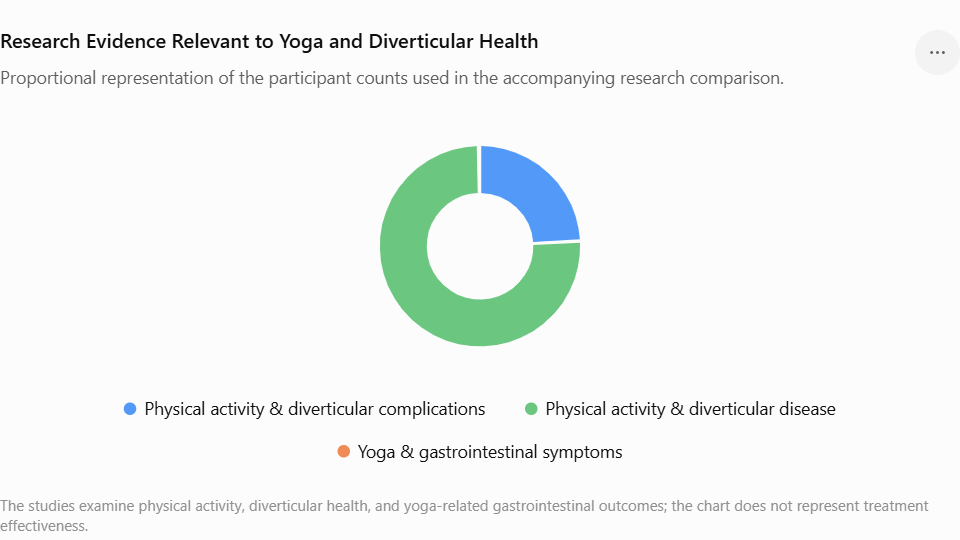
Ketidakaktifan fisik dikaitkan dengan risiko divertikulitis yang lebih besar, sedangkan aktivitas fisik secara teratur dianggap sebagai salah satu faktor gaya hidup yang dapat membantu menurunkan risiko.(1)
Yoga dapat memberikan salah satu cara untuk tetap aktif.
Namun, itu seharusnya bukan satu-satunya bentuk gerakan yang Anda andalkan. Berjalan kaki, latihan kekuatan, berenang, bersepeda, dan aktivitas lain yang sesuai juga dapat berkontribusi pada gaya hidup aktif.(2)
2 . dapat membantu manajemen stres.
Hidup dengan gejala pencernaan yang berulang bisa membuat stres.
Yoga menggabungkan gerakan dengan pernapasan dan relaksasi terkontrol, yang dapat membuatnya berguna sebagai bagian dari rutinitas manajemen stres.
Ini tidak berarti Penyebab stres divertikulitis atau yoga dapat mencegah serangan. Sebaliknya, Yoga dapat membantu beberapa orang Kelola stres psikologis yang terkait dengan hidup dengan masalah kesehatan kronis atau berulang.
3. Meningkatkan mobilitas umum.
Yoga lembut dapat bekerja pada:
- Mobilitas Pinggul
- gerakan tulang belakang
- mobilitas bahu
- imbangan
- keluwesan
Mempertahankan mobilitas umum menjadi semakin penting ketika seseorang telah menghabiskan beberapa hari istirahat selama sakit.
4. Mendukung kembali aktivitas secara bertahap.
Setelah sakit, Anda bisa tergoda untuk segera kembali ke intensitas latihan Anda sebelumnya.
Itu tidak selalu merupakan pendekatan terbaik.
Yoga lembut dapat memberikan pilihan intensitas rendah saat Anda secara bertahap membangun kembali tingkat aktivitas normal Anda.
Prinsip umum kembali berolahraga secara bertahap setelah sakit didukung oleh panduan latihan yang lebih luas. (niddk)
Yoga dan kesehatan pencernaan.
Sistem pencernaan merespons banyak faktor, termasuk diet, aktivitas fisik, stres, tidur, obat-obatan, dan kondisi medis yang mendasarinya.(3)
Beberapa latihan yoga melibatkan gerakan lembut batang tubuh dan pernapasan terkontrol, yang mungkin terasa santai bagi sebagian orang.
Tetapi penting untuk tidak melebih-lebihkan ini.
Yoga bukan pengganti Rekomendasi diet dan medis yang digunakan untuk mengelola penyakit divertikular.
Misalnya, rekomendasi diet dapat berbeda tergantung pada apakah seseorang mengalami episode akut, pulih dari satu, atau mencoba untuk menjaga kesehatan jangka panjang. Selama pemulihan dari divertikulitis, profesional kesehatan dapat merekomendasikan transisi secara bertahap dari cairan ke makanan rendah serat dan akhirnya kembali ke makanan biasa Diet sebagai gejala membaik.
Setelah sembuh, banyak Orang-orang didorong untuk makan yang seimbang, diet kaya serat bila sesuai secara medis.
Waktu terbaik untuk berlatih yoga.
Jika Anda telah pulih dari episode akut dan telah diizinkan untuk melanjutkan olahraga, memilih waktu yang tepat dapat membuat yoga lebih nyaman.
pagi.
yang lembut pagi Sesi dapat membantu Anda memulai hari dengan gerakan ringan.
Coba:
- pernapasan lembut
- anak sapi
- pose gunung
- Gerakan duduk yang lembut
Hindari segera melompat ke pose canggih.
malam.
Sesi malam dapat berguna jika tujuan Anda adalah relaksasi.
Rutinitas yang lebih lambat yang melibatkan pernapasan dan peregangan lembut mungkin lebih disukai daripada kelas yoga kekuatan yang intens.
setelah makan.
Hindari segera melakukan yoga yang kuat setelah makan besar.
Berikan waktu yang cukup untuk pencernaan dan pilih gerakan lembut jika Anda berlatih di sekitar waktu makan.
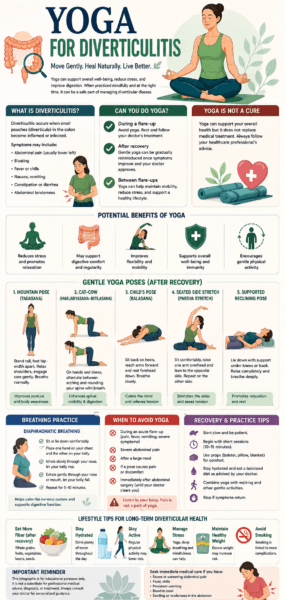
Pose yoga lembut untuk penyakit divertikular.
Sekali lagi, ini Pose lebih cocok untuk orang yang tidak mengalami flare divertikulitis akut dan telah disarankan bahwa aktivitas lembut adalah tepat.
Tujuannya adalah relaksasi dan gerakan yang nyaman—tidak memaksa perut atau mencoba “memijat” usus besar.
1. pose gunung.
Pose gunung (tadasana) adalah salah satu postur yoga paling sederhana.
Berdiri tegak dengan:
- Kaki nyaman diposisikan
- bahu rileks
- tulang belakang secara alami diperpanjang
- Lengan beristirahat di sisi Anda
Ambil napas perlahan dan fokus pada menjaga postur yang nyaman.
Pose ini membutuhkan sedikit gerakan perut dan dapat berfungsi sebagai titik awal yang mudah.
2 .kucing-sapi.
Cat-Cow adalah latihan mobilitas tulang belakang yang lembut.
Mulailah dengan tangan dan lutut Anda.
Bergantian perlahan antara:
- Perpanjangan tulang belakang yang nyaman
- Pembulatan tulang belakang yang lembut
Koordinasikan gerakan dengan pernapasan Anda.
Jangan melebih-lebihkan gerakan atau memaksa perut Anda menjadi kompresi.
Jika berada di tangan dan lutut menyebabkan ketidaknyamanan perut, pilih gerakan duduk sebagai gantinya.
3. Pose anak.
anak Pose bisa santai, tetapi kompresi perut bervariasi tergantung pada seberapa dalam Anda melipat.
Jika Anda merasa nyaman:
- berlutut di atas tikar.
- Perlahan-lahan turunkan pinggul ke arah tumit.
- bersandar ke depan dengan lembut.
- Istirahatkan lengan Anda dengan nyaman.
- bernapas secara alami.
Jangan memaksa perut Anda ke paha Anda.
Jika posisi menyebabkan tekanan atau nyeri, lewati saja.
4. Pernapasan duduk.
Anda tidak perlu pose yoga yang rumit.
Duduklah dengan nyaman dengan tulang punggung Anda yang ditopang dan latih pernapasan yang lambat dan rileks.
Cobalah menghirup dengan lembut melalui hidung Anda dan biarkan perut Anda bergerak secara alami.
Lalu hembuskan perlahan.
Jangan memaksakan napas dalam-dalam atau tahan napas.
5. Peregangan samping yang duduk dengan lembut.
Duduklah dengan nyaman dan angkat satu tangan di atas kepala.
Bersandar sedikit ke sisi yang berlawanan tanpa menekan atau meregangkan perut secara agresif.
Kembali ke tengah dan ulangi di sisi lain.
Jaga gerakannya tetap kecil dan nyaman.
6. posisi berbaring yang didukung.
Posisi berbaring yang nyaman dapat berguna untuk relaksasi.
Gunakan bantal atau guling untuk menopang tubuh Anda.
Tujuannya adalah untuk mengurangi ketegangan otot daripada membuat peregangan yang kuat.
Latihan pernapasan dan divertikulitis.
Pernapasan adalah salah satu komponen yoga yang paling mudah untuk dimodifikasi.
Latihan pernapasan sederhana dapat melibatkan:
- duduk dengan nyaman.
- Santai bahu Anda.
- bernapas dengan lembut melalui hidung Anda.
- memungkinkan perut untuk bergerak secara alami.
- menghembuskan napas perlahan.
- berulang selama beberapa menit.
Hindari teknik pernapasan yang kuat, retensi napas yang berkepanjangan, atau pranayama yang kuat saat Anda tidak sehat.
Jika teknik pernapasan menyebabkan pusing, ketidaknyamanan, atau sakit perut, berhentilah.
Yoga setelah pemulihan divertikulitis.
Kembali ke yoga setelah divertikulitis harus bertahap.
Pikirkan pemulihan Anda sebagai kemajuan daripada sakelar.
Tahap 1: Istirahat dan perawatan medis.
Selama fase akut, ikuti instruksi perawatan profesional kesehatan Anda.
Tahap 2: Gerakan lembut.
Setelah gejala membaik dan aktivitas sesuai, mulailah dengan berjalan kaki dan mobilitas yang lembut.
Tahap 3: Yoga Dasar.
Tambahkan pose sederhana seperti:
- pose gunung
- Kucing-Sapi yang lembut
- Pernapasan duduk
- Peregangan berdiri lembut
Tahap 4: Latihan normal.
Saat kekuatan dan kepercayaan diri Anda kembali, secara bertahap lanjutkan latihan yoga normal Anda.
Jangan segera kembali ke yoga panas yang intens, yoga yang kuat, inversi lanjutan, atau sesi panjang.
Bagaimana dengan pose memutar?
Pose memutar layak mendapat perhatian khusus.
Anda akan sering menemukan klaim online yang memutar “bersihkan usus besar” atau “pijat organ pencernaan.”
Penjelasan ini sering dibesar-besarkan.
Putaran lembut mungkin Sangat nyaman untuk kesehatan orang, tetapi tidak ada alasan untuk memaksa rotasi tulang belakang yang dalam dalam upaya untuk mengobati divertikulitis.
Jika Anda baru saja pulih dari sebuah episode, mulailah dengan gerakan kecil yang nyaman.
Berhenti jika Anda mengalami:
- sakit perut
- tekanan
- yg suka menular
- kepuyengan
- Gejala yang memburuk
Bagaimana dengan inversi?
Headstand, bahu, dan inversi lanjutan lainnya tidak diperlukan untuk seseorang yang mencari Manfaat Yoga.
Jika Anda pulih dari divertikulitis, ada lebih sedikit alasan untuk memperkenalkan inversi yang menantang.
Fokus pada gerakan sederhana dan nyaman terlebih dahulu.
kesalahan umum yang harus dihindari.
Kesalahan 1: Berlatih melalui rasa sakit.
Rasa sakit bukanlah sesuatu yang Anda butuhkan untuk “mendorong” selama pemulihan.
Berhenti jika sebuah gerakan menyebabkan sakit perut.
Kesalahan 2: Memperlakukan Yoga sebagai Perawatan Medis.
Yoga dapat melengkapi gaya hidup sehat, tetapi tidak menggantikan perawatan medis untuk divertikulitis.
Kesalahan 3: Memulai terlalu intens.
Jika Anda menghabiskan waktu berhari-hari untuk beristirahat, tingkat kebugaran Anda mungkin akan lebih rendah untuk sementara.
Mulai perlahan.
Kesalahan 4: Mengikuti video yoga online generik.
Sebuah video yang dirancang untuk praktisi yang sehat dan berpengalaman mungkin mencakup gerakan yang tidak sesuai selama pemulihan Anda.
Pilih rutinitas yang lembut dan ubah gerakan berdasarkan kondisi Anda saat ini.
Kesalahan 5: Mengabaikan tanda-tanda peringatan.
Jangan menganggap sakit perut saat berolahraga hanyalah “kekakuan.”
Gejala baru atau memburuk patut mendapat perhatian.
Rutinitas yoga yang lembut setelah divertikulitis.
Jika Anda sudah diizinkan untuk berolahraga, mulailah dengan sesi singkat daripada segera kembali ke kelas yoga yang intens.
Rutinitas sederhana selama 10-15 menit bisa terlihat seperti ini:
| gerak badan | Perkiraan waktu |
|---|---|
| Pernapasan yang nyaman | 2 menit |
| pose gunung | 1 Menit |
| Gerakan bahu yang lembut | 1 Menit |
| anak sapi | 2 menit |
| Peregangan samping berdiri yang lembut | 1 Menit |
| Peregangan duduk yang didukung | 2 menit |
| Gerakan pinggul lembut | 2 menit |
| Relaksasi pernapasan | 2-4 menit |
Durasi yang tepat tidak penting. Kenyamanan dan kemajuan bertahap lebih penting.
Jika ada gerakan yang menyebabkan ketidaknyamanan perut, berhenti dan pilih posisi yang lebih mudah.
Pose yoga yang harus dihindari selama suar aktif.
Selama episode divertikulitis akut, lebih baik tidak bereksperimen dengan gerakan yoga yang menantang.
Secara khusus, hindari praktik-praktik yang kuat yang melibatkan:
- Kompresi perut dalam
- liku-liku yang kuat
- Latihan perut yang kuat
- Pembalikan lanjutan
- Backbends yang intens
- menahan nafas dalam waktu lama
- aliran yang sangat berat
Tidak ada bukti yang baik bahwa pose ini mengobati divertikulitis, dan memaksa gerakan saat Anda mengalami gejala perut akut dapat membuat Anda merasa lebih buruk.
Alih-alih, ikuti instruksi profesional kesehatan Anda. Pengobatan divertikulitis tergantung pada tingkat keparahan dan mungkin melibatkan perubahan pola makan, pengobatan, atau perawatan di rumah sakit dalam kasus yang rumit.
Bagaimana dengan yoga untuk sembelit?
Sembelit dapat terjadi dengan penyakit divertikular, tetapi tidak secara otomatis diasumsikan bahwa Sembelit disebabkan oleh divertikulitis.
lemah lembut Aktivitas fisik dapat mendukung Keteraturan usus secara keseluruhan, dan aktivitas fisik secara teratur adalah bagian dari panduan gaya hidup untuk mengurangi risiko divertikulitis.
Yoga mungkin salah satu bentuk yang menyenangkan gerakan, tetapi jangan mengandalkan pose puntir atau “pijat usus besar” yang mengklaim mengobati sembelit yang terus-menerus.
Sebagai gantinya, pertimbangkan gambaran yang lebih besar:
- Asupan cairan yang cukup
- Asupan serat yang tepat saat Anda tidak dalam flare akut
- Aktivitas fisik secara teratur
- Diet seimbang
- Saran medis saat sembelit berlanjut
Jika Anda baru pulih dari divertikulitis, jangan tiba-tiba meningkatkan serat tanpa mempertimbangkan gejala Anda saat ini dan rekomendasi profesional kesehatan Anda. Kebutuhan diet dapat berubah selama episode akut dan pemulihan.
Bisakah yoga membantu kembung?
Beberapa orang merasa bahwa gerakan lembut membantu mereka merasa kurang tidak nyaman saat kembung.
Namun, Kembung memiliki banyak kemungkinan penyebab, dan yoga bukanlah pengobatan yang terbukti untuk kembung terkait divertikulitis.
Jika kembung disertai dengan sakit perut yang signifikan, muntah, demam, pembengkakan perut, atau ketidakmampuan untuk mengeluarkan tinja atau gas, jangan mencoba mengatasi masalah dengan yoga saja.
Gejala-gejala tersebut memerlukan penilaian medis.
Berjalan vs. Yoga untuk divertikulitis.
Anda tidak perlu memilih antara berjalan dan yoga.
Keduanya dapat memiliki tempat dalam gaya hidup aktif ketika Anda cukup sehat secara medis untuk berolahraga.
Berjalan sangat mudah dikendalikan karena Anda dapat menyesuaikan:
- memperkenakan
- jarak
- kepanjangan
- kehebatan
NIDDK merekomendasikan untuk memulai dengan jumlah aktivitas fisik yang dapat dikelola dan mencatat bahwa aktivitas yang singkat pun dapat diperhitungkan untuk menjadi lebih aktif.
Yoga, sementara itu, dapat menambahkan:
- mobilitet
- imbangan
- keluwesan
- Latihan pernapasan
- pengenduran
Untuk seseorang yang kembali beraktivitas setelah divertikulitis, jalan kaki yang mudah mungkin lebih tepat pada awalnya daripada kelas yoga penuh.
Diet, hidrasi dan yoga.
Yoga hanya satu bagian dari Mengelola Kesehatan Anda Secara Keseluruhan.
Diet dan hidrasi juga bisa menjadi masalah, terutama saat Anda pulih dari divertikulitis.
Selama episode akut, profesional kesehatan Anda dapat merekomendasikan untuk mengubah pola makan Anda untuk sementara. Ketika gejala membaik, makanan umumnya diperkenalkan kembali secara bertahap sesuai dengan bimbingan medis.
Setelah pemulihan, banyak orang dapat secara bertahap kembali ke keseimbangan Diet yang mengandung makanan kaya serat.
Sumber serat dapat mencakup:
- buah-buahan
- sayur-may
- biji-bijian utuh
- kacang
- benih
Cairan yang cukup Asupan juga penting karena serat Bekerja sama dengan air untuk membantu menjaga tinja lebih lembut dan lebih mudah untuk dilewatkan.
Namun, rekomendasi diet harus bersifat individual jika Anda memiliki gejala berulang, komplikasi, penyempitan usus, atau kondisi gastrointestinal lainnya.
Seberapa sering Anda harus berlatih yoga?
Tidak ada “resep yoga divertikulitis” berbasis bukti khusus.”
Alih-alih, pertimbangkan yoga sebagai salah satu komponen dari aktivitas Anda secara keseluruhan.
Setelah Anda pulih dan profesional kesehatan Anda mengatakan olahraga itu tepat, Anda mungkin mulai dengan:
2–3 cupat Sesi per minggu.
Jika Anda mentolerirnya dengan baik, Anda dapat secara bertahap meningkatkan frekuensi.
Anda tidak perlu melakukan sesi berdurasi satu jam.
Bahkan rutinitas lembut 10-20 menit dapat memberikan kesempatan untuk bergerak.
Bagaimana kemajuan latihan yoga Anda?
Tujuan pertama Anda setelah pemulihan seharusnya kesabaran, bukan intensitas.
Minggu 1.
Cobalah sesi singkat yang sebagian besar terdiri dari pernapasan, mobilitas lembut, dan pose berdiri dasar.
Minggu 2.
Jika Anda bebas gejala dan menoleransi aktivitas, secara bertahap tingkatkan durasinya.
Minggu 3 dan seterusnya.
Anda mungkin mulailah menggabungkan lebih banyak yoga normal Anda Berlatihlah, asalkan terasa nyaman dan Anda disarankan bahwa olahraga normal itu tepat.
Tidak perlu terburu-buru.
Pengembalian bertahap sangat masuk akal setelah Anda menghabiskan waktu istirahat karena sakit.
Bagaimana jika yoga menyebabkan sakit perut?
Hentikan latihan.
Jangan berasumsi Rasa sakit berarti pose adalah “bekerja.
berkerongkong Rasa sakit dapat memiliki banyak penyebab, dan divertikulitis sendiri dapat menyebabkan nyeri perut yang signifikan. (niddk)
Jika ketidaknyamanan hilang dengan cepat setelah berhenti dan tidak kembali, sebutkan kepada profesional kesehatan Anda jika itu mengkhawatirkan Anda.
Jika rasa sakit berlanjut, menjadi parah, atau disertai dengan gejala lain, cari perawatan medis.
Tanda peringatan yang tidak boleh Anda abaikan.
Ini sangat penting bagi siapa pun yang mencari yoga untuk divertikulitis karena olahraga tidak boleh menunda evaluasi gejala yang berpotensi serius.
Carilah perhatian medis segera untuk gejala-gejala seperti:
- sakit perut parah atau persisten
- demam
- nyeri perut yang signifikan
- Muntah terus-menerus
- tinja berdarah
- perut bengkak
- Ketidakmampuan untuk menjaga cairan
Mayo Clinic merekomendasikan penilaian medis untuk sakit perut parah dan mengenai gejala seperti demam, tinja berdarah, mual atau muntah yang persisten, atau nyeri perut yang nyata.
Jika Anda mengalami gejala-gejala ini, singkirkan matras yoga dan cari perawatan medis yang tepat.
Bisakah yoga mencegah divertikulitis?
Terlalu kuat untuk mengatakan bahwa yoga mencegah divertikulitis.
Apa yang dapat kita katakan adalah bahwa aktivitas fisik secara teratur dikaitkan dengan risiko divertikulitis yang lebih rendah, dan yoga dapat menjadi salah satu bentuk aktivitas fisik.
Faktor gaya hidup lain juga relevan, termasuk menjaga berat badan yang sehat, tidak merokok, makan makanan yang tepat, dan Tetap aktif secara fisik.
Oleh karena itu, pikirkan yoga sebagai bagian dari gaya hidup sehat daripada pengobatan pencegahan khusus.
Apakah Yoga “memijat” usus besar?
Ini adalah klaim populer dalam konten kesehatan online.
Anda mungkin melihat tikungan tertentu dipasarkan sebagai cara untuk “memissing usus besar,” menghilangkan racun, atau menghilangkan divertikula.
Klaim ini tidak boleh disajikan sebagai fakta medis yang ditetapkan.
Usus besar Anda tidak perlu “didetoksifikasi” oleh yoga.
kepunyaan Sistem pencernaan sudah memiliki mekanisme untuk diproses dan menghilangkan limbah, sedangkan hati dan ginjal melakukan peran penting dalam memproses zat dan menjaga keseimbangan internal.
Yoga dapat membantu Anda bergerak, rileks, dan menjadi lebih sadar akan tubuh Anda, tetapi tidak boleh dipasarkan sebagai perawatan pembersih usus besar.
Bisakah Anda melakukan yoga setelah operasi divertikulitis?
Ini berbeda dengan pemulihan dari divertikulitis yang tidak rumit.
Jika Anda pernah menjalani operasi usus, rencana pemulihan Anda harus datang dari ahli bedah atau tim kesehatan Anda.
Bahkan gerakan lembut mungkin perlu dimodifikasi pada awalnya karena jaringan perut perlu waktu untuk sembuh.
Jangan gunakan program yoga online umum sebagai rencana rehabilitasi pasca-bedah Anda.
Seorang profesional kesehatan dapat memberi tahu Anda kapan Anda siap untuk melanjutkan:
- hal berjalan kaki
- regangan
- yoga
- latihan kekuatan
- Latihan perut
Yoga untuk orang dengan riwayat divertikulitis.
Jika Anda pernah menderita divertikulitis sebelumnya tetapi saat ini merasa sehat, tujuannya bukanlah untuk hidup dalam ketakutan akan episode lain.
Sebaliknya, fokuslah pada kebiasaan yang berkelanjutan.
Ini mungkin termasuk:
- Aktivitas fisik secara teratur
- Diet seimbang
- Asupan serat yang sesuai
- hidrasi yang cukup
- Menjaga berat badan yang sehat
- Menghindari merokok
- Mengikuti rekomendasi profesional kesehatan Anda
Olahraga teratur adalah salah satu faktor gaya hidup yang terkait dengan risiko divertikulitis yang lebih rendah.
Yoga bisa muat nyaman ke dalam gaya hidup itu.
pertanyaan yang sering diajukan.
1. Bisakah yoga menyembuhkan divertikulitis?
ndak . Tidak ada bukti yang cukup bahwa yoga dapat menyembuhkan divertikulitis. Divertikulitis akut memerlukan penilaian medis yang tepat dan pengobatan bila diperlukan.
2 . Apakah yoga baik untuk divertikulosis?
Untuk seseorang dengan divertikulosis yang dinyatakan sehat dan tidak memiliki gejala akut, yoga dapat menjadi bentuk aktivitas fisik dan dapat mendukung mobilitas dan kesejahteraan umum. Ini harus menjadi bagian dari gaya hidup sehat secara keseluruhan daripada dianggap sebagai pengobatan untuk divertikula.
3. Bisakah saya melakukan yoga selama flare divertikulitis?
Jika Anda mengalami flare akut, terutama dengan sakit perut yang signifikan, demam, muntah, atau gejala lain yang berkaitan, jangan gunakan yoga untuk mengobatinya. Ikuti instruksi profesional kesehatan Anda dan cari perawatan medis bila perlu.
4. Apa yoga paling lembut untuk divertikulitis?
Setelah pemulihan dan ketika latihan tepat, latihan lembut yang melibatkan pernapasan, pose berdiri dasar, latihan mobilitas ringan, dan relaksasi umumnya lebih masuk akal daripada latihan yang kuat atau sangat kompresif.
5. Bisakah yoga membantu sembelit?
Aktivitas fisik yang lembut dapat mendukung keteraturan usus secara umum, tetapi yoga tidak boleh dianggap sebagai pengobatan untuk sembelit yang terus-menerus. Diet, hidrasi, aktivitas, obat-obatan, dan kondisi medis yang mendasari semuanya penting.
6. Bisakah saya melakukan yoga setelah serangan divertikulitis?
Setelah gejala Anda sembuh dan Anda disarankan untuk melanjutkan olahraga, Anda biasanya dapat kembali secara bertahap. Mulailah dengan sesi singkat dan lembut daripada segera kembali ke yoga yang intens.
7 . Apakah berjalan lebih baik daripada yoga untuk divertikulitis?
Tidak ada yang lebih baik secara universal. Berjalan adalah cara sederhana untuk meningkatkan aktivitas fisik, sementara yoga menambah mobilitas, keseimbangan, dan relaksasi. Keduanya dapat memiliki tempat dalam latihan rutin yang sesuai.
8. Haruskah saya menghindari tikungan jika saya menderita divertikulitis?
Putaran yang dalam atau kuat tidak diperlukan dan tidak boleh digunakan untuk mengobati divertikulitis. Selama pemulihan, pilih gerakan lembut dan berhenti jika memutar menyebabkan ketidaknyamanan perut.
pemikiran akhir.
Yoga untuk divertikulitis perlu didekati secara berbeda dari saran kebugaran biasa.
Jika Anda mengalami suar akut, prioritas Anda adalah perawatan medis yang tepat—tidak mencoba meregangkan, memutar, atau menghilangkan peradangan.
Setelah Anda pulih dan diberi tahu bahwa aktivitas fisik sudah sesuai, yoga dapat menjadi cara yang lembut untuk memperkenalkan kembali gerakan, meningkatkan mobilitas, berlatih pernapasan, dan mendukung umum fisik dan mental kesejahteraan.
Prinsip yang paling penting adalah memulai dengan lembut dan berkembang secara bertahap.
Anda tidak perlu pose yang rumit. Beberapa menit pernapasan yang nyaman, mobilitas dasar, pose berdiri, dan relaksasi bisa cukup untuk memulai.
Dan ingat bahwa yoga hanyalah salah satu bagian dari gambarannya. aktivitas fisik secara teratur, diet yang tepat, hidrasi, manajemen berat badan yang sehat, dan mengikuti rekomendasi profesional kesehatan Anda semua memerankan dalam kesehatan pencernaan jangka panjang.
Yang terpenting, jangan biarkan rutinitas yoga online menunda perhatian medis. Sakit perut yang parah, demam, muntah persisten, tinja berdarah, atau nyeri perut yang signifikan memerlukan evaluasi medis yang tepat.
+3 Sumber
FreaktoFit memiliki pedoman pengadaan yang ketat dan bergantung pada studi peer-review, lembaga penelitian pendidikan, dan organisasi medis. Kami menghindari penggunaan referensi tersier. Anda dapat mempelajari lebih lanjut tentang bagaimana kami memastikan konten kami akurat dan terkini dengan membaca Kebijakan Editorial.
- Aktivitas fisik menurunkan komplikasi divertikular; https://pmc.ncbi.nlm.nih.gov/articles/PMC3144158/
- Indeks massa tubuh dan aktivitas fisik dan risiko penyakit divertikular: tinjauan sistematis dan meta-analisis studi prospektif; https://pmc.ncbi.nlm.nih.gov/articles/PMC5682875/
- Meditasi dan Yoga untuk Sindrom Iritable Bowel: Uji Klinis Acak; https://pubmed.ncbi.nlm.nih.gov/36422517/
+1 sumber
Fitmemore memiliki pedoman pengadaan yang ketat dan bergantung pada studi peer-review, lembaga penelitian pendidikan, dan organisasi medis. Kami menghindari penggunaan referensi tersier. Anda dapat mempelajari lebih lanjut tentang bagaimana kami memastikan konten kami akurat dan terkini dengan membaca Kebijakan Editorial.
- faktor penyebab, manifestasi klinis, dan strategi terapi untuk sindrom iritasi usus besar; https://www.researchgate.net/publication/380019267_Causative_Factors_Clinical_Manifestations_and_Therapeutic_Strategies_for_Irritable_Bowel_Syndrome