







































 treino

 meditação


 podcast
 e-book

Os fatos rápidos
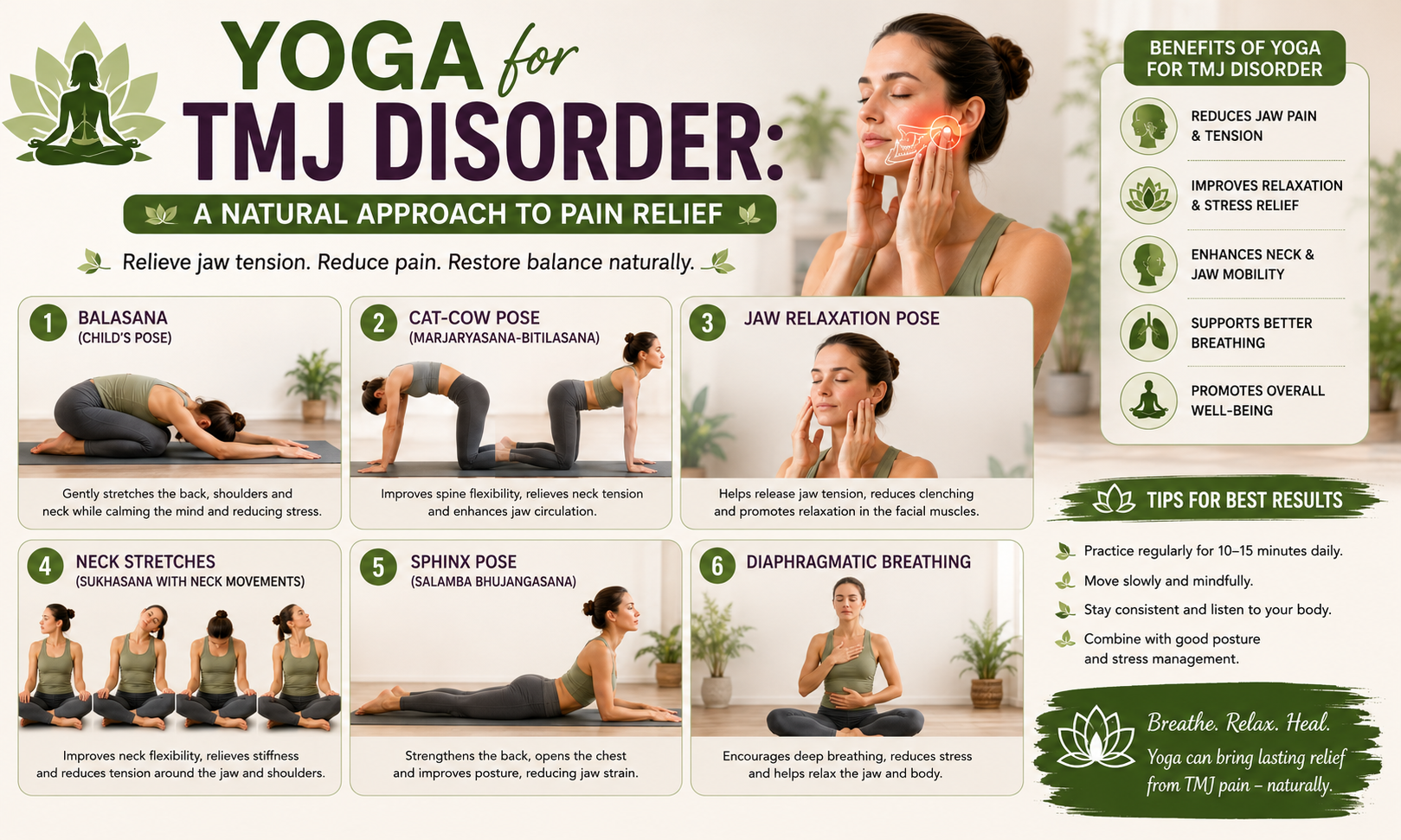
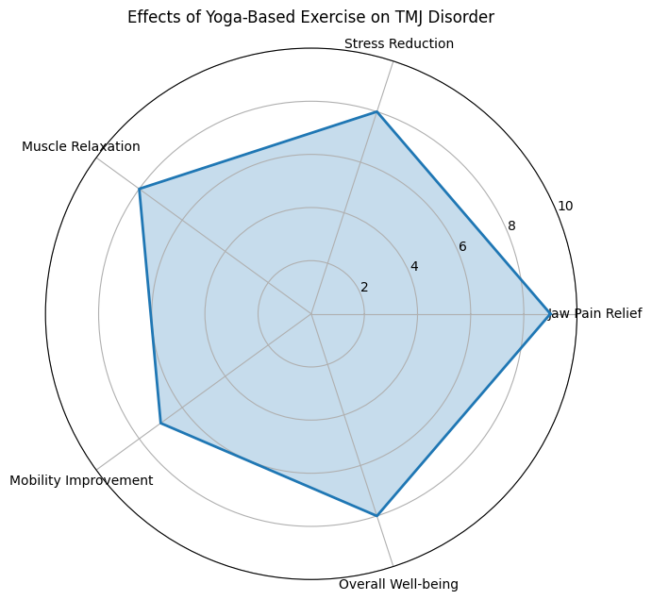
- The chart highlights the effects of yoga-based exercises on key TMJ disorder health factors, showing the strongest benefits for jaw pain relief, with high improvements in stress reduction, muscle relaxation, and overall well-being, and a moderate yet meaningful impact on jaw mobility and posture, emphasizing yoga’s role as a supportive natural therapy for temporomandibular disorder management (Effect of Yoga-based Exercise Program in Female Patients With Myofascial Pain of Temporomandibular Disorders, 2024).
- A 2019 study published in the Journal of Bodywork and Movement Therapies found that patients with TMJ disorder who practiced yoga experienced a significant reduction in pain and jaw dysfunction compared to those who received standard medical treatment alone.
- In this article, we will explore how yoga can relieve TMJ pain, what poses are most effective, and provide insights from experts on the benefits of yoga for TMJ disorder.
Temporomandibular Joint Disorder, commonly known as TMJ disorder, affects millions of people worldwide. The temporomandibular joint, located where the jaw connects to the skull, plays a vital role in daily activities like talking, chewing, and even breathing. When this joint becomes dysfunctional, it can lead to pain, discomfort, and restrictions in movement. But what if I told you there is a natural, non-invasive way to help alleviate the symptoms of TMJ disorder? That solution is yoga.
Yoga, a practice that combines physical postures, breathing techniques, and mindfulness, has been gaining recognition as a powerful tool for managing TMJ disorder. In this article, we will explore how yoga can relieve TMJ pain, what poses are most effective, and provide insights from experts on the Benefícios do Yoga for TMJ disorder.
What Is TMJ Disorder?
Temporomandibular Joint Disorder involves pain and dysfunction in the jaw joint and surrounding muscles. This disorder can be caused by a variety of factors, including injury to the jaw, arthritis, teeth grinding (bruxism), or misalignment of the teeth or jaw. Symptoms of TMJ disorder include:
Histórias relacionadas
 Melhores poses de ioga, pranayama e mudra para transtorno bipolar
 Queixo mudra: benefícios, efeitos colaterais, como fazer e contra-indicações
- Jaw pain or tenderness.
- dores de cabeça.
- Difficulty chewing.
- Locking of the jaw.
- Clicking or popping sounds when opening or closing the mouth.
Traditional treatments include medication, physical therapy, and sometimes surgery. However, more people are turning to complementary therapies like yoga for relief.
How Can Yoga Help with TMJ Disorder?
Yoga is widely recognized for its ability to reduce stress, improve posture, and promote relaxation—all of which are crucial in managing TMJ disorder. Stress is a major contributor to TMJ symptoms, and yoga’s calming techniques help alleviate both mental and physical tension in the body.(1)
Furthermore, yoga strengthens the muscles around the jaw, neck, and shoulders, promoting better alignment and reducing the strain on the TMJ joint. The gentle stretches and controlled movements found in yoga help improve flexibility and mobility in these areas.
Scientific Evidence: The Benefits of Yoga for TMJ Disorder.
Several studies have shown the potential Benefícios do Yoga in managing TMJ disorder. A 2019 study published in the Journal of Bodywork and Movement Therapies found that patients with TMJ disorder who practiced yoga experienced a significant reduction in dor and jaw dysfunction compared to those who received standard medical treatment alone.

incorporando yoga into daily routines can help reduce inflammation and improve blood circulation, which is essential for healing. Deep breathing exercises used in yoga also promote relaxation of the muscles, reducing the likelihood of tension that exacerbates TMJ disorder.
Interview with an Expert: Dr. Amanda White, Physical Therapist.
To gain further insight into how yoga can help with TMJ disorder, I spoke with Dr. Amanda White, a licensed physical therapist specializing in TMJ dysfunction and holistic treatments. Dr. White has seen firsthand the benefits of yoga for her patients suffering from TMJ disorder.

um dos key issues in TMJ disorder is muscle tension and stress. Yoga’s focus on mindful breathing and relaxation helps release that tension in a natural and gentle way. Over time, yoga can even retrain the muscles and nerves, reducing the frequency and intensity of TMJ symptoms.” — Dr. Amanda White
Dr. White recommends specific yoga poses that target the neck, jaw, and upper back, which are often tense in individuals with TMJ disorder. She suggests that yoga works best when combined with other therapies, such as physical therapy and jaw exercises.
The Best Yoga Poses for TMJ Relief.
Here are some poses de ioga that can help alleviate TMJ pain and tension:
1 Pose da criança (Balasana).
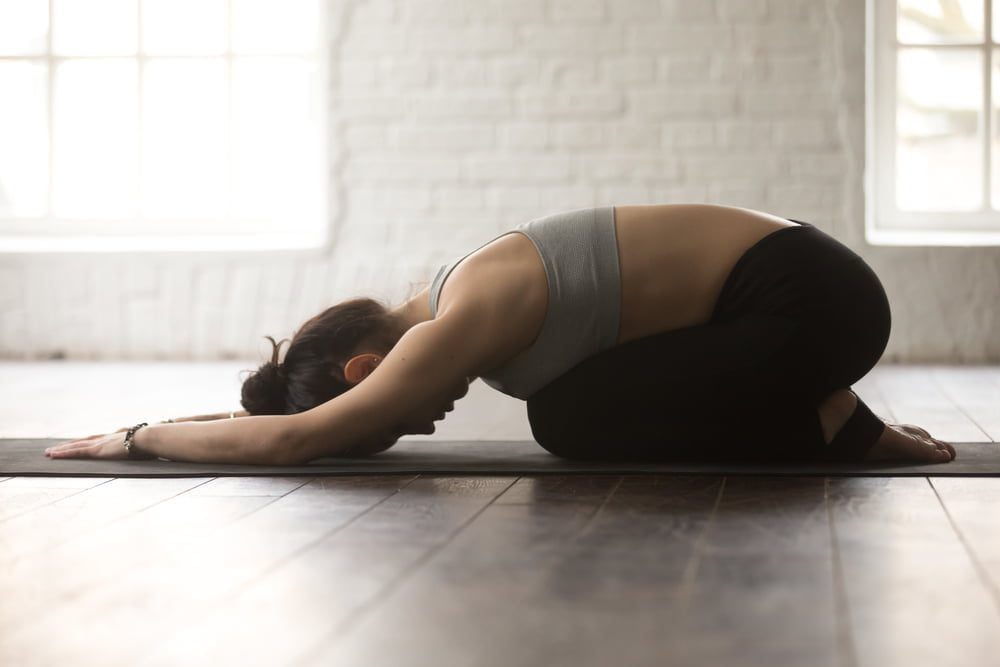
This restorative pose stretches the back and neck while promoting relaxation. It helps release tension in the jaw and upper body. Simply kneel on the floor, sit back on your heels, and extend your arms forward while resting your forehead on the mat.
2 Pose de vaca-gato (Marjaryasana-Bilasana).
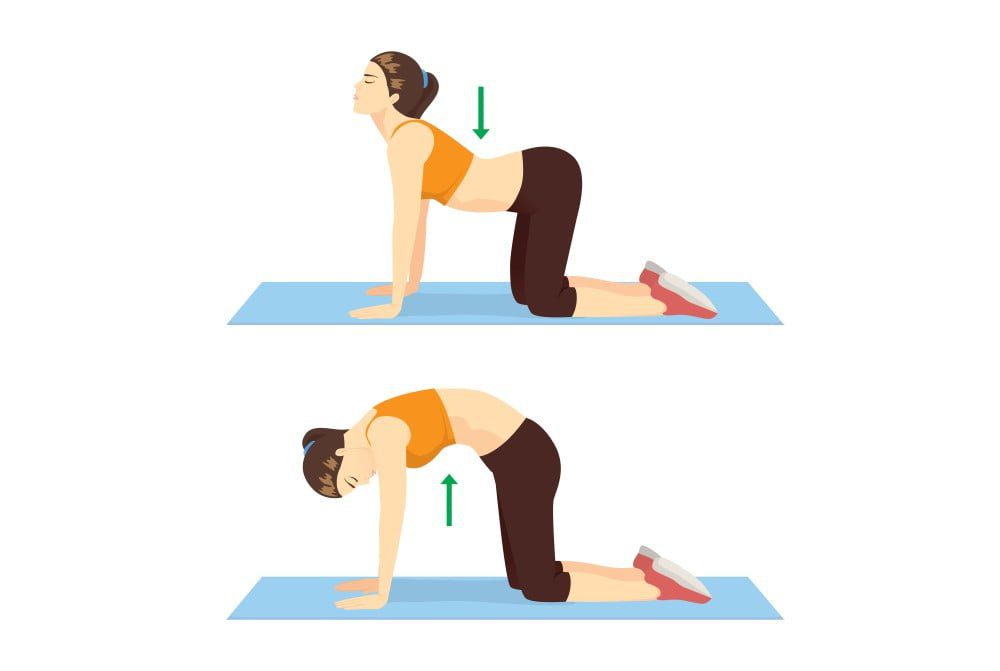
The gentle movement between Cat and Cow poses helps mobilize the spine, neck, and shoulders. This can relieve pressure on the jaw and improve posture, which is crucial for managing TMJ symptoms.
3 Jaw Relaxation Pose.
Although not a traditional yoga pose, simply sitting in a comfortable cross-legged position and focusing on relaxing the jaw muscles can provide significant relief. Keep your mouth slightly open and focus on deep, slow breaths.
4 Neck Stretches (Sukhasana with Neck Movements).
Neck tension is a common trigger for TMJ pain. While seated in a cross-legged position, slowly tilt your head from side to side, gently stretching the muscles along the pescoço. This helps reduce tightness that may contribute to TMJ discomfort.
5 Pose da Esfinge (Salamba bhujangasana).
This gentle backbend strengthens the muscles of the upper back and neck, helping to support better posture and reduce strain on the jaw joint.
Yoga Breathing Techniques for TMJ Relief.
Breathing is an essential part of yoga and plays a critical role in reducing TMJ symptoms. Deep, mindful breathing calms the nervous system and helps release muscle tension in the jaw and face. One highly recommended technique is:
Respiração diafragmática.
This breathing technique involves taking slow, deep breaths that fill the diaphragm rather than shallow breaths that only fill the chest. Lie on your back with your hands on your abdomen and take a slow breath in through your nose, allowing your belly to rise. Then, exhale slowly through your mouth, letting your belly fall. Repeat this several times to calm your nervous system and relax your jaw.
Personal Testimonial: Jane’s Journey with TMJ and Yoga.
I had the opportunity to speak with Jane, a long-time yoga practitioner who suffered from TMJ disorder for years. She shared her experience with using yoga to manage her symptoms.
“Yoga has been life-changing for me. I used to wake up every morning with jaw pain and headaches, but after incorporating yoga into my daily routine, my pain has significantly decreased. The breathing exercises, in particular, have helped me calm my mente e corpo, reducing the stress that was contributing to my TMJ issues.” — Jane, TMJ Disorder Survivor
Jane’s story is a testament to the potential of ioga as a complementary therapy for TMJ disorder. She emphasizes that consistency is key and that yoga should be viewed as part of an overall wellness plan.
Perguntas frequentes.
1 Can yoga completely cure TMJ disorder?
Yoga cannot “cure” TMJ disorder, but it can significantly reduce symptoms by alleviating muscle tension, improving posture, and promoting relaxation. It is most effective when combined with other treatments.
2 How often should I practice yoga for TMJ relief?
It’s best to practice yoga regularly—ideally, daily. Even short sessions of 15-20 minutes can be beneficial. Focus on poses and breathing techniques that target the neck, jaw, and shoulders.
3 Do I need a yoga instructor to practice yoga for TMJ?
While a yoga instructor can guide you through proper techniques, you can also practice at home. Many online resources and videos offer guidance on poses specifically designed for TMJ relief.
4 Are there any risks to practicing yoga for TMJ disorder?
Yoga is generally safe for most people, but it’s important to listen to your body. If you experience any pain or discomfort, stop and consult a healthcare professional. Avoid any poses that strain the jaw or neck.
linha de fundo.
Yoga is a powerful, natural tool that can help manage the pain and discomfort associated with TMJ disorder. Through gentle movements, mindful breathing, and relaxation techniques, yoga targets the root causes of TMJ symptoms—stress and muscle tension. By incorporating yoga into your daily routine, you may find relief and improve your overall well-being.
If you are dealing with TMJ disorder, consider trying yoga as part of your treatment plan. While it may not provide an immediate cure, its long-term benefits can be life-changing, as seen in the experiences of many practitioners. Always consult with a healthcare professional before starting any new treatment, but don’t underestimate the power of a holistic approach like yoga in your journey to pain relief.
+1 de origem
A FreaktoFit tem diretrizes rígidas de sourcing e conta com estudos revisados por pares, institutos de pesquisa educacional e organizações médicas. Evitamos o uso de referências terciárias. Você pode aprender mais sobre como garantimos que nosso conteúdo seja preciso e atualizado, lendo nosso política editorial.
- Effect of Yoga-based Exercise Program in Female Patients With Myofacial Pain of Temporomandi̇bular Di̇sorders; https://www.researchgate.net/publication/378052752_Effect_of_Yoga-based_Exercise_Program_in_Female_Patients_With_Myofacial_Pain_of_Temporomandibular_Disorders