











































 Workout

 Meditation


 Podcast
 E-book


AT A GLANCE
- It has a lower caffeine content than green or black teas, and it is higher in antioxidants than green or black tea.
- White tea is a type of herbal tea that is produced from the leaves of the Camellia sinensis plant.
- White tea has a lower caffeine content than green or black teas, with about half the amount found in black tea.

There are many different types of tea, but most popular are green tea and white tea, which has been used in Asia for centuries as part of their daily diet and health practices. White tea vs green tea: What’s the difference between these two teas, and which one should you choose to incorporate into your daily routine? Let’s know from experts.
White Tea vs Green Tea : Which Is Healthier?
What Is Green Tea?
Green tea is a caffeinated beverage that is made from the leaves of Camellia sinensis, which is an evergreen shrub. Green tea leaves are fermented before they are dried and brewed.
This fermentation process makes green tea more potent than black tea and white tea because the leaves have been oxidized.
Related Stories
 Amazing Pink Sauce: TikTok’s Most Viral Recipe
 Amazing Military Diet Plan For Rapid Weight Loss
Studies have shown that green tea can improve cardiovascular health, reduce cancer risk, promote weight loss, and more.

Benefits of Green Tea.
Green tea is a powerful antioxidant, making it one of the healthiest beverages around. It’s loaded with compounds that will help you lose weight, improve your heart health and fight cancer.(1)
It’s also packed with EGCG, which is a type of catechin that reduces inflammation and helps the body process sugar. And unlike coffee, green tea has the ability to reduce stress and anxiety levels because it contains L-theanine (a type of amino acid).(2)
The caffeine in green tea can help make you more alert, but there’s still less than what you’ll find in a typical cup of coffee. In fact, green tea has been shown to be just as effective as caffeine at increasing alertness when consumed before exercise or mental tasks.
What Is White Tea?
White tea is made from young leaves, which are steamed and dried. The steaming process makes the leaves soft, reducing oxidization and giving white tea a very delicate flavor.
This type of tea is also known for its high levels of antioxidants, which are linked to lowering risks of cancer and heart disease.
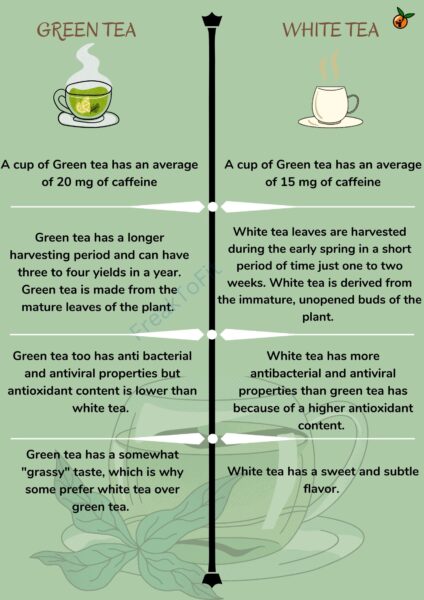
White tea has a lower caffeine content than green or black teas, with about half the amount found in black tea. So it’s a good choice for those looking to avoid caffeine or just have a lighter drink.
Such teas come from Ceylon (Sri Lanka), India, Japan and China. They range in color from amber to pale gold and usually have light flavors with low astringency.

Benefits Of White Tea.
White tea is a type of herbal tea that is produced from the leaves of the Camellia sinensis plant. It has a lower caffeine content than green or black teas, and it is higher in antioxidants than green or black tea.
White tea also tastes sweeter and less astringent than other types of teas because it undergoes less oxidation during processing.
Additionally, white tea does not contain tannins, which are found in high quantities in other types of teas.
White teas provide protection against free radicals, cancer-causing substances, and UV radiation that can damage skin cells.(3)
Myths About Both Teas.
Myth 1. White tea is less acidic than green tea.
Myth 2. White tea has more antioxidants than green tea.
Myth 3. White tea has fewer calories than green tea.
Myth 4. White teas are always sweetened, so you don’t need to add sugar or other sweeteners to make it taste good, while green teas can be bitter and require added sugar or sweeteners for an enjoyable taste.
Caffeine Level Comparison.
Caffeine is a stimulant that has many effects on your body, including increasing heart rate and blood pressure. White tea contains less caffeine than green tea because it’s been steamed for a shorter amount of time.
Both white tea and green tea contain antioxidants, but the composition of the plant compounds vary between the two teas. If you’re looking for a caffeine fix with minimal side effects, try white tea as an alternative to green tea.
The Key Differences Between the Two.
White tea is a type of tea that comes from the Camellia sinensis plant. It has less caffeine than green tea, making it a more soothing option for those who are sensitive to coffee or other caffeinated drinks. White tea also contains less tannins and caffeine, which can make it more gentle on the stomach and easier to drink in excess.
On the other hand, white tea contains more polyphenols than green tea, which is what gives it its antioxidant properties.
That being said, green teas offer a similar amount of antioxidants as white teas but with more tannins and caffeine to give you an energy boost in the morning or after lunch. If you’re looking for a way to switch up your regular routine, drinking both white and green tea may be beneficial.
For example, if you drink white tea every morning for breakfast then switch to green tea at night before bedtime, this could help balance out your diet during the day.
But because they are two different types of teas, white tea vs green tea will have different health benefits depending on how much time you spend with each one.
A Quick Look at Research Studies on Both Teas.
White tea is the healthier choice of the two teas because it has a higher concentration of antioxidants. Though green tea has a higher concentration of caffeine, white tea also contains caffeine and L-theanine, which is an amino acid that promotes relaxation.
White tea also contains more polyphenols than green tea. Polyphenols are healthy compounds that have been shown to improve cardiovascular health, reduce inflammation, and have anti-cancer properties.
White tea also has less caffeine than green tea, so if you’re looking for a less caffeinated option then white would be your best bet.
There is some debate as to whether white or green tea is better for your heart with some studies showing benefits with both types while others show one over the other depending on where they were conducted.(4)
Frequently Asked Questions.
The best time to drink white tea is in the morning.
Yes, it is good for oily skin as it helps in flushing out of toxins from the body.
Yes, it is good as it soothes the digestive system.
Yes, you can and it will help in balancing the antioxidants property too.
Yes, green tea helps in skin whitening, besides, it also helps in hydration of the skin.
Bottom Line.
White tea are different than green tea, as they contain many more calories and sugar. It have the least amount of caffeine out of all teas, but still contain a decent amount of caffeine. White teas are less bitter and have a sweeter taste than green teas. So, you may try both white and green tea according to your needs.
+4 Sources
Freaktofit has strict sourcing guidelines and relies on peer-reviewed studies, educational research institutes, and medical organizations. We avoid using tertiary references. You can learn more about how we ensure our content is accurate and up-to-date by reading our editorial policy.
- Antioxidant effects of green tea; https://www.ncbi.nlm.nih.gov/pmc/articles/PMC3679539/
- Anti-stress Effect of Green Tea with Lowered Caffeine on Humans: A Pilot Study; https://pubmed.ncbi.nlm.nih.gov/28566632/
- Cancer-Preventive Potential Of White Tea; https://www.sciencedaily.com/releases/2000/04/000410084553.htm
- Green and white teas as health-promoting foods; https://pubs.rsc.org/en/content/articlehtml/2021/fo/d1fo00261a