


















Pertama kali saya mendengar tentang CrossFit Murph, saya pikir itu hanyalah latihan menantang lainnya yang dinikmati oleh para penggemar kebugaran secara online.
Lalu aku melihat latihannya.
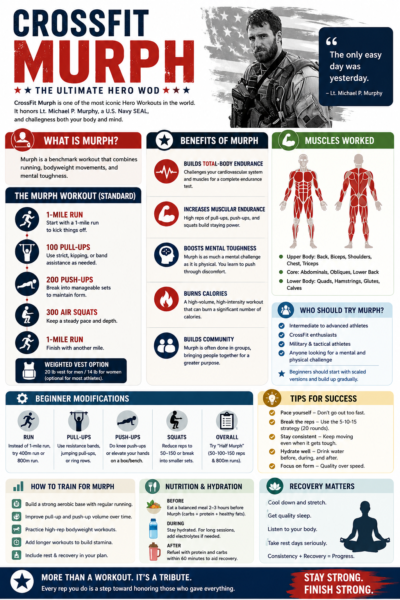
lari satu mil.
100 pull-up.
Cerita terkait
 Berapa banyak latihan yang harus Anda lakukan pada hari kaki?
 Mayseeds: Gaya Hidup, Rutinitas Latihan, dan Rencana Diet
200 push-up.
300 squat udara.
Lari satu mil lagi.
Dan untuk atlet berpengalaman, sambil mengenakan rompi berbobot 20 pon (14 pon untuk wanita dalam kompetisi).

Pada saat itu, saya mengerti mengapa Murph menjadi salah satu latihan yang paling dihormati di komunitas CrossFit.
Tapi yang lebih membuatku terkesan bukanlah kesulitannya.

Itu adalah kisah di baliknya.
Tidak seperti rutinitas latihan biasa, latihan Murph dibuat untuk menghormati Seal Angkatan Laut AS yang jatuh, membuat setiap pengulangan mewakili tekad, ketahanan, dan pengorbanan.
Saat ini, orang-orang di seluruh dunia menyelesaikan tantangan Murph setiap tahun—tidak hanya untuk menguji kebugaran fisik mereka, tetapi juga untuk mengingat Letnan Michael P. Murphy dan orang lain yang bertugas.
Dalam panduan ini, saya akan menjelaskan apa itu CrossFit Murph, cara kerjanya, manfaatnya, siapa yang harus mencobanya, dan bagaimana pemula dapat dengan aman mempersiapkan pahlawan WOD ini.
Apa itu CrossFit Murph?
CrossFit Murph adalah salah satu pahlawan WOD yang paling terkenal (Latihan hari ini) di komunitas CrossFit.
A Hero WOD adalah latihan yang didedikasikan untuk menghormati personel militer, responden pertama, atau pegawai negeri yang kehilangan nyawa dalam menjalankan tugas.
Murph menggabungkan:
- yg berjalan
- pulsa
- kenakalan
- Squat udara
menjadi satu latihan seluruh tubuh yang menuntut.
Tidak seperti banyak fokus pada kekuatan Latihan yang menekankan mengangkat beban berat, Murph terutama bergantung pada latihan berat badan yang dikombinasikan dengan daya tahan kardiovaskular.
Tantangan latihan:
- kekuatan
- Daya tahan otot
- kebugaran kardiovasku
- Ketahanan mental
- hal memasukkan kend
Kesan pertama saya tentang Murph.
Menonton atlet elit CrossFit menyelesaikan Murph membuatnya tampak hampir mudah.
Mencoba bahkan versi skala dengan cepat mengubah perspektif saya.
Mil pertama terasa bisa dikelola.
Pull-up membutuhkan lebih banyak usaha dari yang diharapkan.
Push-up menjadi semakin sulit.
Squat menguji kaki saya.
Kemudian datanglah mil kedua—diperlakukan saat sudah lelah.
Saat itulah saya menyadari Murph bukan hanya tentang kekuatan.
Ini tentang mondar-mandir, konsistensi, dan ketangguhan mental.
Sejarah di balik CrossFit Murph.
Latihan Murph menghormati Letnan Michael Patrick Murphy, seorang SEAL Angkatan Laut Amerika Serikat yang dianugerahi Medal of Honor atas keberaniannya yang luar biasa selama Operasi Red Wings di Afghanistan pada 2005.
Sebelum dikenal sebagai “Murph,” Letnan Murphy dilaporkan merujuk pada ini Latihan sebagai “tubuh baju besi.
Dia sering melakukannya sambil mengenakan pelindung tubuh militer.
Setelah kematiannya, CrossFit mengganti nama latihan “Murph” untuk menghormatinya.
Saat ini, ribuan afiliasi CrossFit di seluruh dunia menyelenggarakan Murph Challenge, terutama di sekitar Memorial Day di Amerika Serikat.
Meskipun banyak orang menyelesaikan Murph sebagai bagian dari acara Memorial Day, itu juga dapat dilakukan sepanjang tahun sebagai tantangan kebugaran pribadi.
Mengapa disebut Murph?
Latihan ini membawa julukan Murph untuk memperingati dedikasi, kepemimpinan, dan pengorbanan Letnan Michael Murphy.
Bagi banyak peserta, menyelesaikan latihan lebih dari sekadar pencapaian fisik.
itu mewakili:
- menghormati
- perasaan bersyukur
- ketekunan
- dinas
- ummat
Memahami cerita di balik Murph sering memberi makna yang lebih besar pada latihan.
Apa yang termasuk dalam latihan Murph?
Latihan CrossFit Murph tradisional terdiri dari lima komponen.
1. lari satu mil.
Latihan dimulai dengan:
Lari 1 mil (1,6 km)
Ini segera meningkatkan detak jantung saat mempersiapkan tubuh untuk latihan berat badan volume tinggi.
2. Seratus pull-up.
Setelah menyelesaikan proses:
100 pull-up
Banyak peserta membaginya menjadi set yang lebih kecil daripada melakukannya secara berurutan.
3. Dua ratus push-up.
Berikutnya datang:
200 push-up
Bagian ini sering menjadi salah satu bagian yang paling menuntut secara fisik.
4. Tiga ratus squat udara.
diikuti oleh:
300 squat berat badan
Ini menantang daya tahan otot di kaki sambil meningkatkan permintaan kardiovaskular.
5. Lari satu mil lagi.
Akhirnya:
Lari mil lain
menyelesaikan putaran kedua saat lelah sering dianggap sebagai salah satu yang terbesar Tantangan mental latihan.
Latihan CrossFit Murph standar.
Latihan ini secara tradisional ditulis sebagai:
- Lari 1 mil
- 100 pull-up
- 200 push-up
- 300 squat udara
- Lari 1 mil
Versi lanjutan
Lengkap saat memakai:
- Rompi 20-lb (Pria)
- Rompi berbobot 14-lb (wanita di banyak kompetisi)
Rompi opsional dan umumnya direkomendasikan hanya untuk atlet berpengalaman.
Bisakah pengulangan dipecah?
YA.
Salah satu strategi umum disebut “Partisi ”Cindy".
Alih-alih tampil:
100 pull-up
kemudian
200 push-up
kemudian
300 squat,
Peserta menyelesaikan:
20 putaran:
- 5 pull-up
- 10 push-up
- 15 squat udara
Ini sering membantu mempertahankan kecepatan yang konsisten.
Otot bekerja selama CrossFit Murph.
Murph adalah latihan seluruh tubuh yang benar.
tubuh bagian atas.
Otot-otot primer meliputi:
- latissimus dorsi
- otot lengan sebelah atas
- pundak
- peti mayat
- trisep
Otot-otot ini bekerja paling keras selama pull-up dan push-up.
inti.
Sepanjang latihan, inti Anda menstabilkan tubuh Anda selama:
- yg berjalan
- kenakalan
- pulsa
- jomblo
kuat Keterlibatan inti mendukung postur dan pergerakan yang efisien.
tubuh bagian bawah.
Tubuh bagian bawah melakukan pekerjaan yang signifikan selama:
- Berlari.
- Squat udara.
Otot-otot primer meliputi:
- paha depan.
- hamstring.
- glutes.
- anak sapi.
sistem kardiovaskular.
Berlari sebelum dan sesudah latihan berat badan menempatkan permintaan terus menerus pada sistem kardiovaskular.(1),(2),(3)
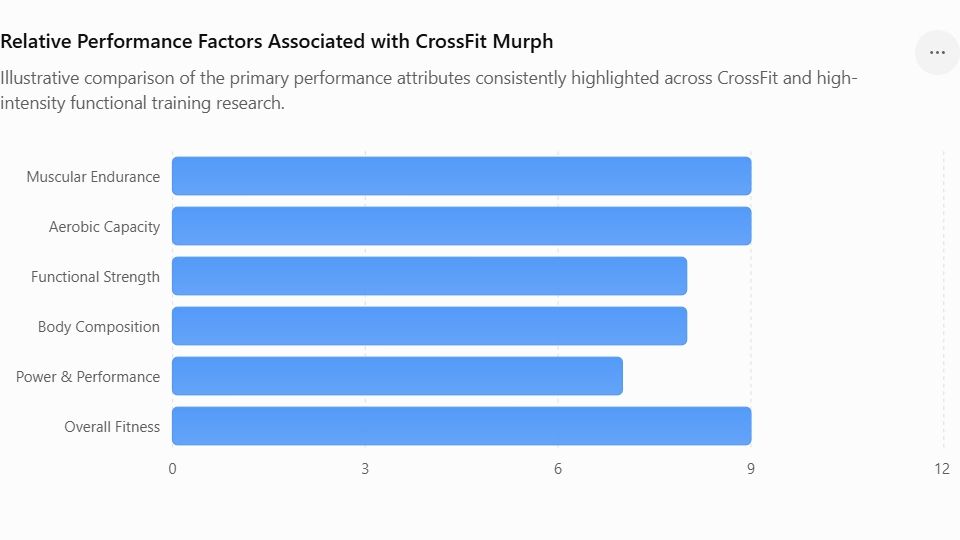
Ini berkontribusi pada peningkatan daya tahan aerobik ketika dimasukkan dengan tepat ke dalam program pelatihan terstruktur.
Manfaat CrossFit Murph.
Murph telah menjadi populer karena alasan yang baik.
Ketika didekati dengan aman dan progresif, ia menawarkan Beberapa manfaat kebugaran potensial.
1. Membangun daya tahan otot.
Menyelesaikan ratusan pengulangan berat badan menantang otot untuk mempertahankan upaya selama periode yang lama.
Ini mengembangkan daya tahan daripada kekuatan maksimal.
2. Meningkatkan kebugaran kardiovaskular.
Berlari dikombinasikan dengan latihan berat badan volume tinggi menciptakan Latihan kardiovaskular yang.
Banyak peserta melihat peningkatan dalam ketahanan selama waktu dengan pelatihan yang konsisten.
3. Meningkatkan ketangguhan mental.
Murph membutuhkan tekad.
Memecah latihan menjadi bagian-bagian yang dapat dikelola sering kali mengajarkan kesabaran, fokus, dan ketahanan.
4. Mengembangkan kekuatan fungsional.
Karena Murph sangat bergantung pada gerakan berat badan, itu meningkatkan kekuatan praktis yang digunakan selama aktivitas sehari-hari.
5. Membakar kalori yang signifikan.
Meskipun pengeluaran kalori bervariasi tergantung pada ukuran tubuh, intensitas, dan durasi latihan, Murph dianggap sebagai latihan dengan permintaan energi tinggi karena kombinasi lari dan latihan berat badan dalam jumlah besar.
6. Membangun komunitas.
Salah satu aspek yang paling saya hargai adalah rasa kebersamaan di sekitar Murph.
Banyak peserta saling mendorong terlepas dari tingkat kebugaran.
Pengalaman bersama sering kali menciptakan motivasi yang langgeng.
Siapa yang harus mencoba CrossFit Murph?
Murph dapat diadaptasi untuk banyak tingkat kebugaran.
Mungkin cocok untuk:
- Atlet CrossFit berpengalaman.
- Penggemar kebugaran militer.
- peserta kebugaran fungsional.
- atlet ketahanan.
- Latihan menengah mencari tantangan.
Namun, Pemula harus menghindari mencoba latihan penuh tanpa persiapan.
Perkembangan bertahap jauh lebih aman dan menyenangkan.
modifikasi pemula.
Satu hal yang selalu saya rekomendasikan adalah menskalakan latihan berdasarkan tingkat kebugaran Anda saat ini.
Pilihan pemula yang populer meliputi:
Setengah Murph.
- lari 800 meter.
- 50 pull-up.
- 100 push-up.
- 150 squat udara.
- lari 800 meter.
Pull-up yang dibantu.
Gunakan:
- pita resistensi.
- deretan dering.
- Mesin pull-up yang dibantu.
Push-up lutut.
Kurangi permintaan tubuh bagian atas sambil menjaga kualitas gerakan.
Pengulangan yang berkurang.
Alih-alih menyelesaikan semua pengulangan, mulailah dengan:
- 25 pull-up.
- 50 push-up.
- 75 squat.
dan secara bertahap membangun dari waktu ke waktu.
Lewati rompi berbobot.
Rompi berbobot hanya boleh ditambahkan setelah menguasai latihan tanpa beban ekstra.
Berapa lama waktu yang dibutuhkan CrossFit Murph?
Waktu penyelesaian bervariasi berdasarkan pengalaman dan tingkat kebugaran.
Rentang khas meliputi:
- Atlet elit: 30-40 menit.
- Atlet tingkat lanjut: 40-55 menit.
- Peserta menengah: 50-70 menit.
- Pemula (diskalakan): 45-90 menit atau lebih.
Tujuannya bagi kebanyakan orang bukanlah kecepatan—itu mempertahankan bentuk yang baik, mondar-mandir, dan menyelesaikan dengan aman.
Bagaimana mempersiapkan CrossFit Murph?
Persiapan merupakan salah satu faktor terpenting dalam menyelesaikan CrossFit Murph Latihan. Karena Murph menggabungkan lari jarak jauh dengan volume latihan berat badan yang tinggi, melompat ke dalam Latihan tanpa latihan dapat meningkatkan risiko kelelahan atau cedera yang berlebihan.
Ketika saya pertama kali mempertimbangkan untuk mencoba Murph, saya segera menyadari bahwa mempersiapkannya membutuhkan lebih dari sekadar meningkatkan pull-up atau kecepatan lari saya. itu menuntut pendekatan seimbang yang mencakup kekuatan, daya tahan, mobilitas, pemulihan, dan kecepatan.
Berikut adalah beberapa cara praktis untuk mempersiapkan.
Membangun ketahanan lari.
Karena Murph dimulai dan diakhiri dengan lari satu mil, akan sangat membantu untuk memasukkan lari rutin sesi dalam pelatihan Anda.
Bertujuan untuk secara bertahap meningkatkan:
- Jarak lari.
- kecepatan yang nyaman.
- daya tahan kardiovaskuler.
Hindari peningkatan jarak tempuh terlalu cepat.
Meningkatkan kekuatan pull-up.
Bagi banyak orang, pull-up adalah bagian paling menantang dari Murph.
Latihan yang dapat membantu meliputi:
- Pull-up yang dibantu.
- deretan dering.
- Pull-up negatif.
- pulldown lat.
- mati hang.
Berangsur-angsur Kekuatan tarik tubuh bagian atas dapat membuat latihan lebih mudah dikelola.
Meningkatkan volume push-up.
Daripada mencoba 200 push-up sekaligus, bangun ketahanan selama beberapa minggu.
Misalnya:
- Minggu 1: 50–75 Total Push-up.
- Minggu 2: 75-100.
- Minggu 3: 100-125.
Selalu prioritaskan bentuk yang baik.
melatih jongkok udara.
Meskipun squat berat badan tampak sederhana, melakukan ratusan pengulangan dapat dengan cepat melelahkan kaki Anda.
praktek:
- Squat berat badan.
- Tempo squat.
- Squat terbelah.
- Lunge berjalan.
Latihan-latihan ini dapat meningkatkan daya tahan tubuh bagian bawah.
Latihan mondar-mandir latihan.
Satu pelajaran yang saya pelajari adalah bahwa Murph menghargai konsistensi daripada kecepatan.
Hindari memulai terlalu cepat.
Pertahankan kecepatan yang memungkinkan Anda untuk terus bergerak selama latihan.
Nutrisi sebelum Murph.
Nutrisi yang tepat membantu mendorong latihan yang lebih lama.
Makanan seimbang 2-3 jam sebelum murph mungkin termasuk:
- karbohidrat gandum utuh.
- Protein kurus.
- buah-buahan.
- banyak cairan.
Contohnya meliputi:
- Oatmeal dengan buah dan yogurt.
- ayam dengan nasi dan sayuran.
- roti gandum utuh dengan telur.
Hindari mencoba makanan yang tidak dikenal segera sebelum latihan.
Tips hidrasi.
hidrasi sering diabaikan.
Saya merekomendasikan:
- Minum air secara konsisten sepanjang hari sebelum murph.
- Tetap terhidrasi selama cuaca panas.
- Mengganti cairan setelah latihan.
Untuk sesi yang lebih lama atau suhu tinggi, minuman yang mengandung elektrolit mungkin berguna bagi beberapa individu.
Pemulihan setelah CrossFit Murph.
Pemulihan sama pentingnya sebagai pelatihan.
Setelah menyelesaikan Murph, beri waktu tubuh Anda untuk pulih.
Dinginkan.
Luangkan waktu 5-10 menit berjalan perlahan sebelum berhenti sepenuhnya.
meregangkan.
Fokus pada peregangan:
- hamstring.
- paha depan.
- Dada.
- bahu.
- fleksor pinggul.
- anak sapi.
makan makanan yang seimbang.
Makanan pasca-latihan yang mengandung karbohidrat dan protein dapat membantu mengisi kembali simpanan energi dan Mendukung pemulihan otot.
Tidur.
Tidur berkualitas memainkan peran penting dalam Pemulihan dan kinerja keseluruhan.
Bertujuan untuk istirahat yang cukup setelah berolahraga berat.
Kesalahan umum selama CrossFit Murph.
Bahkan atlet berpengalaman pun bisa membuat kesalahan.
Memulai terlalu cepat.
Banyak peserta berlari mil pertama dengan kecepatan yang tidak berkelanjutan.
Sebaliknya, hemat energi untuk seluruh latihan.
mengabaikan bentuk yang tepat.
Ketika kelelahan meningkat, teknik olahraga dapat memburuk.
Pertahankan bentuk yang tepat di seluruh:
- pull-up.
- push-up.
- Squat.
Kualitas lebih penting daripada kecepatan.
melewatkan pemanasan.
Persiapkan tubuh Anda sebelum memulai.
Termasuk:
- joging ringan.
- peregangan dinamis.
- Latihan mobilitas bahu.
- Latihan mobilitas pinggul.
Mengenakan rompi berbobot terlalu cepat.
Rompi secara signifikan meningkatkan kesulitan.
menguasai Latihan tanpa tambahan berat badan sebelum berkembang.
Tidak memecah pengulangan.
Mempartisi pengulangan menjadi set yang lebih kecil sering kali meningkatkan konsistensi.
orang-orang populer 5-10-15 Strategi bekerja dengan baik untuk banyak peserta.
Murph vs WOD pahlawan lainnya.
Murph adalah salah satu dari banyak WOD pahlawan dalam CrossFit.
Berikut perbandingannya.
| latihan | Fokus utama |
|---|---|
| pengurus hari pria | Ketahanan + berat badan |
| DT | angkat Olimpiade |
| yg berhubung dgn nada | gimnastik |
| cabul | Kekuatan Barbel |
| Tommy V | Deadlift & Tali Mendaki |
Murph menonjol karena menggabungkan lari jarak jauh dengan gerakan berat badan bervolume tinggi, menjadikannya salah satu yang paling fisik dan mental Menuntut latihan pahlawan.
Apakah CrossFit Murph aman?
Murph bisa aman saat:
- kemajuannya bertahap.
- teknik yang tepat dipertahankan.
- Tingkat kebugaran individu dihormati.
- pemulihan diprioritaskan.
Namun, latihan mungkin tidak cocok untuk semua orang.
Orang dengan cedera baru-baru ini, kondisi kardiovaskular, masalah sendi, atau lainnya Masalah medis harus berkonsultasi dengan kesehatan profesional sebelum mencoba Murph.
pertanyaan yang sering diajukan.
1. Apa itu CrossFit Murph?
CrossFit Murph adalah Hero Workout of the Day (Hero WOD) yang terdiri dari lari 1 mil, 100 pull-up, 200 push-up, 300 air squat, dan lari 1 mil lainnya. Atlet berpengalaman dapat menyelesaikannya saat mengenakan rompi berbobot.
2. Mengapa disebut Murph?
Latihan ini menghormati Letnan Michael P. Murphy, penerima US Navy SEAL dan Medal of Honor yang terbunuh selama Operasi Red Wings pada tahun 2005.
3. Bisakah pemula melakukan murph?
YA. Pemula harus menggunakan versi skala seperti setengah murph, pull-up berbantuan, push-up lutut, atau pengurangan pengulangan sampai mereka membangun kekuatan dan daya tahan yang memadai.
4. Berapa lama waktu yang dibutuhkan CrossFit Murph?
Waktu penyelesaian sangat bervariasi. Atlet elit dapat menyelesaikannya dalam 30–40 menit, sementara peserta rekreasi sering menyelesaikannya dalam 45–70 menit atau lebih, tergantung pada tingkat kebugaran dan modifikasi latihan.
5. Apakah Anda harus memakai rompi berbobot?
ndak . Rompi berbobot opsional dan umumnya direkomendasikan hanya untuk atlet berpengalaman yang telah menguasai latihan tanpa tambahan berat badan.
6. Bisakah Murph Membantu Membangun Otot?
Murph terutama mengembangkan daya tahan otot dan kekuatan fungsional. Meskipun dapat berkontribusi pada perkembangan otot, pertumbuhan otot yang signifikan biasanya membutuhkan pelatihan ketahanan progresif dan nutrisi yang memadai.
7 . Seberapa sering saya harus melakukan murph?
Karena volume pelatihannya yang tinggi, kebanyakan orang hanya melakukan murph penuh sesekali, seperti pada Hari Peringatan atau setiap beberapa bulan. Frekuensi pelatihan individu harus bergantung pada tingkat kebugaran, kapasitas pemulihan, dan desain program secara keseluruhan.
pemikiran akhir.
Latihan CrossFit Murph jauh lebih dari sekadar tes kebugaran yang menantang. Ini adalah pahlawan WOD yang menggabungkan daya tahan, kekuatan berat badan, dan ketahanan mental sambil menghormati warisan Letnan Michael P. Murphy. Menyelesaikan Murph membutuhkan komitmen, mondar-mandir yang bijaksana, dan rasa hormat terhadap tingkat kebugaran Anda saat ini daripada sekadar mendorong secepat mungkin.
Apakah Anda memilih versi lengkap atau variasi skala, Murph dapat membantu meningkatkan daya tahan kardiovaskular, stamina otot, dan kebugaran fungsional secara keseluruhan saat didekati dengan persiapan dan pemulihan yang tepat. Latihan ini juga berfungsi sebagai pengingat bahwa konsistensi dan disiplin sama pentingnya dengan kekuatan fisik.
Jika Anda baru mengenal CrossFit atau pelatihan volume tinggi, jangan ragu untuk mengubah latihan. Membangun secara bertahap, mempertahankan teknik yang baik, dan mendengarkan tubuh Anda akan membantu Anda menikmati tantangan sekaligus mengurangi risiko cedera. Seiring waktu, Murph tidak hanya menjadi latihan yang berkesan tetapi juga pencapaian pribadi yang bermakna.
+3 Sumber
FreaktoFit memiliki pedoman pengadaan yang ketat dan bergantung pada studi peer-review, lembaga penelitian pendidikan, dan organisasi medis. Kami menghindari penggunaan referensi tersier. Anda dapat mempelajari lebih lanjut tentang bagaimana kami memastikan konten kami akurat dan terkini dengan membaca Kebijakan Editorial.
- Prediktor fisiologis kinerja pada tantangan “Murph” CrossFit; https://pmc.ncbi.nlm.nih.gov/articles/PMC7404702/
- CrossFit®: ‘tidak dapat diketahui’ atau dapat diprediksi?—Tinjauan sistematis tentang prediktor kinerja CrossFit®; https://pmc.ncbi.nlm.nih.gov/articles/PMC10304543/
- Efek pelatihan fungsional intensitas tinggi pada kebugaran fisik dan kinerja khusus olahraga di antara para atlet: tinjauan sistematis dengan meta-analisis; https://pmc.ncbi.nlm.nih.gov/articles/PMC10707569/