
















































Whenever someone asks me whether white tea contains caffeine, I notice there’s a common misconception. Many people assume white tea is naturally caffeine-free because of its light flavor and pale color.
The truth surprised me when I first learned about it.
Yes, white tea does contain caffeine, but it generally has less caffeine than black tea and coffee. However, the exact amount can vary depending on several factors, including the type of white tea, the brewing method, and the age of the tea leaves.
On average, an 8-ounce (240 ml) cup of white tea contains about 15–30 mg of caffeine. Some delicate varieties may contain slightly less, while certain premium white teas made from young buds can contain amounts closer to green tea.


Compared with many caffeinated beverages, white tea is considered a low-caffeine option, making it appealing for people who want a gentle energy boost without the intensity of coffee.
In this guide, I’ll explain what influences the caffeine content of white tea, how it compares with other beverages, and whether it deserves a place in your daily routine.
How Much Caffeine Is in White Tea?
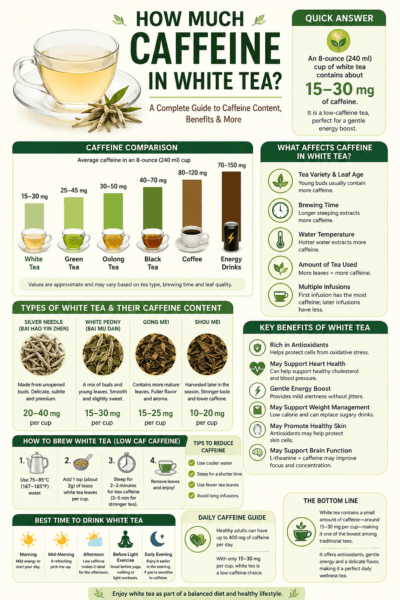
Here’s a quick comparison of the average caffeine content per 8-ounce (240 ml) serving.
| Beverage | Average Caffeine |
|---|---|
| White Tea | 15–30 mg |
| Green Tea | 25–45 mg |
| Oolong Tea | 30–50 mg |
| Black Tea | 40–70 mg |
| Coffee | 80–120 mg |
| Energy Drinks | 70–150 mg |
These values are approximate because brewing time, water temperature, tea variety, and serving size all influence the final caffeine content.

Is There Caffeine in White Tea?
One of the most frequently searched questions online is:
“Is there caffeine in white tea?”

The answer is yes.
All true teas—including:
- White tea.
- Green tea.
- Oolong tea.
- Black tea.
- Pu-erh tea.
come from the same plant:
Camellia sinensis
Because they originate from the same tea plant, they naturally contain caffeine.
The difference lies in how the leaves are processed, not whether caffeine is present.
White tea undergoes minimal processing, which helps preserve many of its natural compounds, including antioxidants and small amounts of caffeine.
What Is White Tea?
White tea is one of the least processed types of tea available.
Unlike black tea, which undergoes full oxidation, white tea is carefully harvested and simply withered and dried.(1)
This gentle processing helps preserve its:
- Delicate floral flavor.
- Natural sweetness.
- Light color.
- Antioxidants.
- Subtle aroma.
Many tea enthusiasts—including myself—appreciate white tea because it offers a smoother, less bitter taste than stronger teas.
Where Does White Tea Come From?
White tea originated in China’s Fujian Province centuries ago.
Today, it is also produced in countries such as:
- India.
- Nepal.
- Sri Lanka.
- Kenya.
- Taiwan.
Traditional Chinese white tea remains the most widely recognized and highly valued.
Why Does White Tea Contain Caffeine?
Many people assume lighter-colored tea means lower caffeine.
While white tea often contains less caffeine than coffee, the relationship isn’t that simple.
Caffeine is naturally produced by the tea plant as a defense mechanism against insects.
It exists inside:
- Young buds.
- Fresh leaves.
- Mature leaves.
Since white tea is often made from young buds and tender leaves, some premium varieties may actually contain more caffeine than expected.
This explains why caffeine levels vary so much between different white teas.
What Affects the Amount of Caffeine in White Tea?
One thing I discovered while learning about tea is that no two cups are exactly alike.
Several factors influence the final caffeine content.
1. Tea Variety.
Different cultivars naturally produce different amounts of caffeine.
Some tea plants are genetically richer in caffeine than others.
2. Young Buds vs Mature Leaves.
Young tea buds generally contain more caffeine than older leaves.
Premium white teas made primarily from unopened buds may therefore contain higher caffeine levels than lower-grade white teas made from mature leaves.
3. Brewing Time.
The longer tea steeps, the more caffeine enters the water.
For example:
- 2 minutes = lower caffeine.
- 5 minutes = higher caffeine.
Longer brewing also produces a stronger flavor.
4. Water Temperature.
Hotter water extracts caffeine more efficiently.
Typical brewing temperatures are:
- White tea: 75–85°C (167–185°F)
Using boiling water may increase caffeine extraction while making the tea taste more bitter.
5. Amount of Tea Used.
Using more tea leaves naturally increases caffeine.
For example:
- 2 grams of leaves produce less caffeine than 5 grams brewed in the same amount of water.
6. Multiple Infusions.
Many premium white teas can be steeped several times.
The first infusion usually contains the highest concentration of caffeine, while later infusions tend to contain progressively less.
Types of White Tea and Their Caffeine Content.
Not all white teas contain the same amount of caffeine.
Here are some of the most popular varieties.
Silver Needle (Bai Hao Yin Zhen).
Silver Needle is considered one of the finest white teas.
Made almost entirely from unopened buds, it offers:
- Delicate floral aroma.
- Smooth texture.
- Light sweetness.
Because buds naturally contain more caffeine, Silver Needle may contain slightly higher caffeine than expected despite its delicate taste.
Approximate caffeine:
20–40 mg per cup
White Peony (Bai Mudan).
White Peony combines buds with young leaves.
It has:
- Richer flavor.
- Slightly fuller body.
- Mild sweetness.
Approximate caffeine:
15–30 mg per cup.
Gong Mei.
Gong Mei contains more mature leaves.
It generally has:
- Stronger flavor.
- Darker liquor.
- Slightly earthier notes.
Approximate caffeine:
15–25 mg per cup.
Shou Mei.
Shou Mei is usually harvested later in the season.
It often contains:
- Mature leaves.
- Fuller taste.
- Lower caffeine than bud-heavy varieties.
Approximate caffeine:
10–20 mg per cup.
Nutritional Profile of White Tea.
White tea contains very few calories.
A plain brewed cup generally provides:
| Nutrient | Approximate Amount |
|---|---|
| Calories | 0–2 kcal |
| Protein | 0 g |
| Fat | 0 g |
| Carbohydrates | 0 g |
| Sugar | 0 g |
| Sodium | 0 mg |
| Caffeine | 15–30 mg |
White tea also contains naturally occurring plant compounds, including:
- Catechins.
- Polyphenols.
- Flavonoids.
- L-theanine.
- Trace minerals.
These compounds contribute to white tea’s antioxidant properties.
Why Is White Tea Considered a Low-Caffeine Tea?
Compared with coffee or black tea, white tea contains significantly less caffeine.
This makes it a popular choice for people who:
- Are sensitive to caffeine.
- Want a gentle energy boost.
- Prefer milder beverages.
- Enjoy drinking tea later in the day.
- Are trying to reduce coffee consumption.
Personally, I appreciate white tea because it provides a subtle feeling of alertness without the jitteriness I sometimes experience after drinking strong coffee.
Why Has White Tea Become So Popular?
Over the past decade, white tea has gained popularity among health-conscious consumers.
Several factors contribute to its growing appeal.
Many people enjoy white tea because it:
- Has a naturally delicate flavor.
- Contains less caffeine than coffee.
- Is rich in antioxidant compounds.
- Pairs well with healthy lifestyles.
- Can be enjoyed hot or iced.
- Offers a refreshing alternative to sugary beverages.
Although white tea isn’t a miracle drink, it can certainly be part of a balanced diet when enjoyed without excessive added sugar.
Caffeine in White Tea vs Green Tea.
One of the questions I get asked most often is:
“Does white tea have less caffeine than green tea?”
In most cases, yes.
However, the answer isn’t always that simple.
The caffeine content of tea depends more on:
- The tea cultivar.
- The age of the leaves.
- Harvest season.
- Brewing temperature.
- Steeping time.
than on the tea’s color.
Generally speaking, white tea tends to contain slightly less caffeine than green tea.
| Tea | Average Caffeine (8 oz) |
|---|---|
| White Tea | 15–30 mg |
| Green Tea | 25–45 mg |
If you’re trying to reduce caffeine without giving up tea entirely, white tea is often a great option.
White Tea vs Black Tea Caffeine.
Black tea undergoes full oxidation, giving it a darker color and bolder flavor.
Because of the tea leaves typically used and the brewing style, black tea usually contains considerably more caffeine.
| Beverage | Average Caffeine |
|---|---|
| White Tea | 15–30 mg |
| Black Tea | 40–70 mg |
When I want a gentler afternoon beverage, I almost always choose white tea over black tea because it feels lighter and less stimulating.
White Tea vs Coffee.
Many people trying to cut back on coffee wonder whether white tea can replace their morning cup.
Here’s how they compare.
| Beverage | Average Caffeine |
|---|---|
| White Tea | 15–30 mg |
| Brewed Coffee | 80–120 mg |
Coffee generally contains three to six times more caffeine than white tea.
If you experience:
- Jitters
- Anxiety
- Rapid heartbeat
- Afternoon crashes
switching one daily coffee to white tea may help reduce your overall caffeine intake.
White Tea vs Matcha.
Matcha deserves special mention because many people assume it’s similar to white tea.
In reality, they’re quite different.
Matcha is made by grinding entire green tea leaves into powder.
Since you consume the whole leaf, matcha generally contains much more caffeine.
| Tea | Average Caffeine |
|---|---|
| White Tea | 15–30 mg |
| Matcha | 35–70 mg |
Matcha also provides higher concentrations of antioxidants and L-theanine.
Does White Tea Give You Energy?
Yes—but differently than coffee.(2)
I notice white tea produces a much gentler feeling of alertness.
Instead of a sudden burst of energy followed by a crash, many people describe white tea as providing:
- Calm focus.
- Steady alertness.
- Improved concentration.
- Mild mental clarity.
This effect may result from the combination of:
- Low caffeine.
- L-theanine.
- Polyphenols.
L-theanine is an amino acid naturally found in tea that may promote relaxation while helping offset some of caffeine’s stimulating effects.
Health Benefits of White Tea.
Besides its relatively low caffeine content, white tea is appreciated for its rich supply of plant compounds.
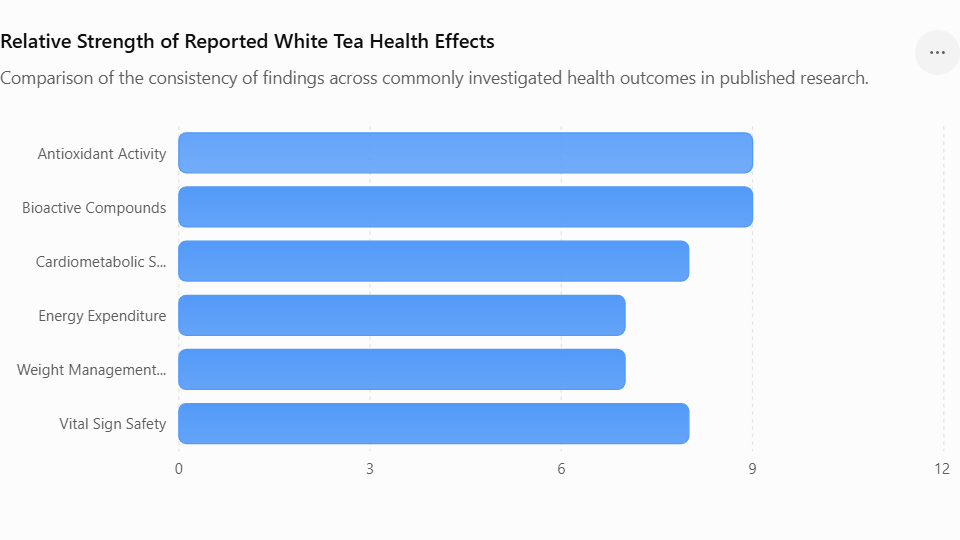
Although more human studies are still needed, current research suggests white tea may offer several potential health benefits.
1. Rich in Antioxidants.
One of the reasons I enjoy white tea is its naturally high antioxidant content.
Because white tea undergoes minimal processing, it retains many beneficial plant compounds.
Its major antioxidants include:
- Catechins.
- Polyphenols.
- Flavonoids.
- EGCG.
- Tannins.
Antioxidants help protect cells from oxidative stress caused by free radicals.
2. May Support Heart Health.
Some research suggests tea consumption may support cardiovascular health.
Tea polyphenols may help:
- Improve blood vessel function
- Reduce oxidative stress
- Support healthy cholesterol levels
- Promote normal blood pressure
White tea should complement—not replace—a heart-healthy lifestyle.
3. May Support Weight Management.
One question I hear frequently is:
“Can white tea help with weight loss?”
White tea alone won’t cause fat loss.(3)
However, it may support weight management because it:
- Contains virtually no calories
- Can replace sugary drinks
- Provides mild caffeine
- May encourage healthier beverage choices
Weight loss still depends primarily on maintaining a calorie deficit through diet and physical activity.
4. May Promote Healthy Skin.
White tea contains antioxidants that may help protect skin cells from oxidative stress.
Laboratory research suggests certain tea polyphenols may support:
- Collagen preservation.
- Skin elasticity.
- Protection against environmental damage.
While promising, white tea isn’t a substitute for sunscreen or proper skincare.
5. May Support Brain Function.
The combination of caffeine and L-theanine makes white tea unique.
Together, these compounds may help improve:
- Attention.
- Mental alertness.
- Focus.
- Reaction time.
Many people—including myself—find white tea easier to tolerate than highly caffeinated beverages.
6. May Help Support Oral Health.
Tea naturally contains fluoride and plant compounds that may help reduce the growth of certain bacteria in the mouth.
Combined with good dental hygiene, white tea may contribute to overall oral health.
However, avoid adding large amounts of sugar if you’re drinking it regularly.
7. May Support Healthy Aging.
Oxidative stress plays a role in the aging process.
Because white tea contains antioxidants, researchers continue investigating whether regular tea consumption may contribute to healthy aging.
Although findings are encouraging, more human clinical studies are needed.
Can White Tea Help You Sleep?
Because white tea contains caffeine, it isn’t considered a sleep-promoting beverage.
However, compared with coffee or black tea, its lower caffeine content may make it less likely to interfere with sleep—especially if consumed earlier in the day.
If you’re particularly sensitive to caffeine, it’s best to avoid white tea close to bedtime.
Is White Tea Good for Weight Loss?
White tea often appears in weight-loss discussions.
Here’s my perspective.
White tea doesn’t directly burn body fat.
Instead, it may support healthy habits because it:
- Contains almost no calories.
- Can replace sugar-sweetened beverages.
- Provides a mild energy boost.
- Encourages hydration.
These factors can make it a useful addition to an overall weight-management plan.
Who Should Drink White Tea?
White tea may be a good choice for people who:
- Want less caffeine than coffee.
- Prefer mild-tasting tea.
- Enjoy antioxidant-rich beverages.
- Are trying to reduce sugary drinks.
- Want a relaxing afternoon beverage.
Is White Tea Safe During Pregnancy?
Pregnant individuals don’t necessarily need to avoid white tea completely.
However, because it contains caffeine, moderation is important.
Many health organizations recommend limiting total caffeine intake during pregnancy to less than 200 mg per day.
If you’re pregnant or breastfeeding, speak with your healthcare provider about the amount of caffeine that’s appropriate for your individual situation.
Can You Drink White Tea Every Day?
For most healthy adults, yes.
Drinking one to three cups daily generally fits well within recommended caffeine intake levels.
I usually recommend enjoying plain white tea without excessive sugar or sweetened syrups to maximize its nutritional benefits.
Best Time to Drink White Tea.
White tea can be enjoyed throughout the day.
Popular times include:
Morning.
Provides gentle alertness without the intensity of coffee.
Mid-Morning.
A refreshing alternative to another cup of coffee.
Afternoon.
Its lower caffeine content makes it a pleasant afternoon beverage for many people.
Before Light Exercise.
Some individuals enjoy white tea before walking, yoga, or light workouts because it provides mild caffeine.
How Much Caffeine Is Safe Per Day?
According to current health guidelines:
- Healthy adults: Up to 400 mg of caffeine per day is generally considered safe.
- Pregnant individuals: It’s often recommended to stay below 200 mg per day, unless advised otherwise by a healthcare professional.
Since a typical cup of white tea contains only 15–30 mg, it contributes relatively little to your daily caffeine intake compared with coffee or energy drinks.
What Does Current Research Suggest?
Current research indicates that white tea contains a variety of beneficial plant compounds with antioxidant activity.
Scientists continue studying its potential effects on:
- Cardiovascular health.
- Metabolic health.
- Brain function.
- Healthy aging.
- Cellular protection.
While laboratory and observational studies are promising, more large-scale human clinical trials are needed before specific health claims can be confirmed.
Possible Side Effects of White Tea.
Although I enjoy white tea regularly, I also believe it’s important to understand its potential drawbacks. While white tea is generally considered safe for most healthy adults, drinking excessive amounts or consuming it under certain circumstances may lead to unwanted effects.
Let’s take a closer look.
1. Caffeine Sensitivity.
Even though white tea contains less caffeine than coffee or black tea, it still isn’t caffeine-free.
If you’re particularly sensitive to caffeine, you may experience:
- Nervousness.
- Restlessness.
- Difficulty sleeping.
- Rapid heartbeat.
- Mild anxiety.
For most people, one or two cups of white tea are unlikely to cause these symptoms.
2. Sleep Disturbances.
Because white tea naturally contains caffeine, drinking it late in the evening may interfere with sleep.
If you struggle with insomnia or poor sleep quality, I recommend enjoying white tea earlier in the day.
3. Reduced Iron Absorption.
Like many teas, white tea contains tannins.
These compounds may reduce the absorption of non-heme iron from plant-based foods when consumed with meals.
If you have iron-deficiency anemia, consider:
- Drinking white tea between meals.
- Waiting about an hour after eating before having tea.
4. Stomach Discomfort.
Drinking large amounts of tea on an empty stomach may cause:
- Mild nausea.
- Stomach irritation.
- Acid reflux in sensitive individuals.
Personally, I find white tea easier on my stomach when enjoyed after a light meal.
5. Excessive Caffeine Intake.
White tea alone is unlikely to push you beyond recommended caffeine limits.
However, if you’re also drinking:
- Coffee.
- Energy drinks.
- Black tea.
- Soft drinks.
- Pre-workout supplements.
your total daily caffeine intake can add up quickly.
Who Should Limit or Avoid White Tea?
Although white tea is suitable for most healthy adults, certain people should speak with a healthcare professional before making it a regular part of their routine.
These include:
- Pregnant or breastfeeding women.
- Individuals with severe caffeine sensitivity.
- People with certain heart rhythm disorders.
- Those taking stimulant medications.
- Individuals with iron-deficiency anemia.
- Anyone advised by a healthcare provider to limit caffeine.
Can Children Drink White Tea?
White tea isn’t generally recommended as a regular beverage for young children because it naturally contains caffeine.
Water and milk remain better everyday choices for hydration.
Older children or teenagers should consume caffeinated beverages only in moderation and under parental guidance.
How to Reduce the Caffeine in White Tea?
If you’re trying to lower your caffeine intake, a few simple brewing techniques can help.
1. Use Cooler Water.
Brew white tea at around:
75–85°C (167–185°F)
instead of boiling water.
2. Shorten the Brewing Time.
Steeping for:
- 2–3 minutes
generally extracts less caffeine than brewing for five minutes or longer.
3. Use Fewer Tea Leaves.
Using a smaller amount of tea naturally lowers the total caffeine in your cup.
4. Discard the First Infusion (Optional).
Some tea drinkers briefly rinse the leaves before brewing.
While this may remove a small amount of caffeine, the overall reduction varies and isn’t guaranteed.
How to Brew White Tea for the Best Flavor?
One reason I enjoy white tea is that it’s remarkably easy to prepare.
You’ll need:
- Fresh filtered water
- White tea leaves
- Tea infuser or teapot
Brewing Instructions.
- Heat water to 75–85°C (167–185°F).
- Add about 2 grams (1 teaspoon) of loose-leaf tea per cup.
- Steep for 2–5 minutes, depending on your preferred strength.
- Remove the leaves and enjoy.
Avoid boiling water, as it can make white tea taste bitter and overpower its delicate floral notes.
How to Choose High-Quality White Tea?
Not all white teas are created equal.
When I shop for white tea, I look for:
- Whole tea leaves rather than tea dust.
- Minimal broken leaves.
- Fresh harvest dates.
- Reputable tea producers.
- Natural aroma.
- No artificial flavorings.
Premium loose-leaf white tea generally offers better flavor and aroma than lower-quality tea bags.
How to Store White Tea?
Proper storage helps preserve both flavor and freshness.
Store white tea in:
- An airtight container.
- A cool, dry place.
- Away from direct sunlight.
- Away from moisture.
- Away from strong-smelling foods.
Properly stored tea can remain flavorful for many months.
Common Myths About White Tea.
Let’s clear up a few common misconceptions.
Myth 1: White Tea Is Caffeine-Free.
Fact: White tea naturally contains caffeine, although usually less than coffee and black tea.
Myth 2: White Tea Always Has Less Caffeine Than Green Tea.
Fact: While often true, premium white teas made from young buds can sometimes contain caffeine levels similar to certain green teas.
Myth 3: White Tea Burns Fat.
Fact: White tea alone doesn’t melt body fat. Weight loss depends primarily on maintaining a calorie deficit through diet and physical activity.
Myth 4: More White Tea Means More Health Benefits.
Fact: Drinking excessive amounts won’t necessarily increase benefits and may contribute to excess caffeine intake or reduced iron absorption.
Myth 5: White Tea Is Just Weak Green Tea.
Fact: White tea is produced using a unique processing method that gives it its own flavor, aroma, and chemical profile.
Frequently Asked Questions.
1. How much caffeine is in white tea?
A typical 8-ounce (240 ml) cup contains approximately 15–30 mg of caffeine, although this varies by variety and brewing method.
2. Does white tea have caffeine?
Yes. White tea comes from the Camellia sinensis plant and naturally contains caffeine.
3. Is white tea healthier than coffee?
They offer different benefits. White tea is lower in caffeine and rich in antioxidants, while coffee generally provides more caffeine and its own unique beneficial compounds. Neither is universally healthier—it depends on your preferences and health goals.
4. Can I drink white tea every day?
Yes. For most healthy adults, enjoying 1–3 cups daily is generally considered safe and can be part of a balanced diet.
5. Is white tea good for weight loss?
White tea may support weight management by replacing sugary beverages and providing a low-calorie drink, but it doesn’t directly cause weight loss.
6. Can I drink white tea at night?
Because it contains caffeine, white tea may affect sleep in sensitive individuals. If you’re sensitive to caffeine, it’s best to drink it earlier in the day.
7. Which white tea has the least caffeine?
Generally, Shou Mei and other white teas made from more mature leaves tend to contain less caffeine than bud-heavy varieties like Silver Needle.
8. Does adding milk reduce caffeine?
No. Adding milk changes the flavor and texture but doesn’t significantly reduce the caffeine content.
9. How much caffeine is in white tea vs coffee?
An 8-ounce (240 ml) cup of white tea typically contains 15–30 mg of caffeine, while the same amount of brewed coffee contains about 80–120 mg. Coffee generally has three to six times more caffeine than white tea.
10. Which tea is lowest in caffeine?
Among true teas, white tea is generally one of the lowest in caffeine, averaging 15–30 mg per cup. Naturally caffeine-free herbal teas, such as chamomile or peppermint, contain no caffeine.
11. Is white tea healthier than green tea?
Both white tea and green tea are healthy and rich in antioxidants. White tea is less processed and usually lower in caffeine, while green tea has been studied more extensively for its health benefits. Neither is universally healthier—it depends on your health goals and personal preference.
12. Is white tea highly caffeinated?
No. White tea is considered a low-caffeine tea, containing significantly less caffeine than black tea, matcha, or coffee, making it a good choice for those looking to reduce their caffeine intake.
Final Thoughts.
So, how much caffeine is in white tea?
For most varieties, the answer is around 15–30 mg per 8-ounce (240 ml) cup, making white tea one of the lowest-caffeine options among traditional teas.
What I appreciate most about white tea is its balance. It offers a gentle lift in energy without the intensity of coffee, while also delivering a smooth taste and naturally occurring antioxidants. Whether you’re trying to reduce your caffeine intake, explore different teas, or simply enjoy a calming beverage, white tea can be an excellent addition to your daily routine.
That said, caffeine content isn’t fixed. Factors such as the tea variety, leaf age, brewing time, water temperature, and the amount of tea used all influence how much caffeine ends up in your cup. If you’re especially sensitive to caffeine or have a medical condition requiring caffeine restriction, adjusting your brewing method or consulting your healthcare provider is a sensible approach.
Ultimately, white tea isn’t just about having less caffeine—it’s about enjoying a minimally processed tea that fits comfortably into a healthy lifestyle. When paired with a balanced diet and mindful habits, it can be a refreshing, flavorful, and satisfying beverage to enjoy every day.
+3 Sources
FitnessQuora has strict sourcing guidelines and relies on peer-reviewed studies, educational research institutes, and medical organizations. We avoid using tertiary references. You can learn more about how we ensure our content is accurate and up-to-date by reading our editorial policy.
- Characterisation of white tea – Comparison to green and black tea; https://link.springer.com/article/10.1007/s00003-007-0250-3
- Acute change in resting energy expenditure and vital signs in response to white tea consumption in females: a pilot study; https://pmc.ncbi.nlm.nih.gov/articles/PMC11546555/
- Tea’s anti‐obesity properties, cardiometabolic health‐promoting potentials, bioactive compounds, and adverse effects: A review focusing on white and green teas; https://pmc.ncbi.nlm.nih.gov/articles/PMC10563719/