

















































The first time I Lisa Valente, Nutritionist tried kombucha tea, I honestly didn’t know what to expect. Friends described it as a mix of sparkling cider, vinegar, and tea. That sounded strange, yet intriguing enough to give it a chance.
One sip immediately surprised me. It was fizzy, slightly sweet, pleasantly tart, and unlike any beverage I had tasted before. While its flavor isn’t for everyone, I became curious about why millions of people around the world consider kombucha tea one of the healthiest fermented beverages available.
As I dug deeper, I discovered that kombucha isn’t a miracle cure, despite what many social media posts claim. However, it does contain beneficial compounds, probiotics, antioxidants, and organic acids that may support overall health when enjoyed as part of a seimbang gaya hidup.
In this guide, I’ll explain everything I’ve learned about kombucha tea—from its fascinating history and brewing process to its nutritional profile and potential health benefits—using evidence-based information rather than exaggerated claims.
Cerita terkait
 Trauma dan manajemen diet lengkapnya
 Diet Paleo: Manfaat, Rencana Makan, dan Efek Samping
What Is Kombucha Tea?
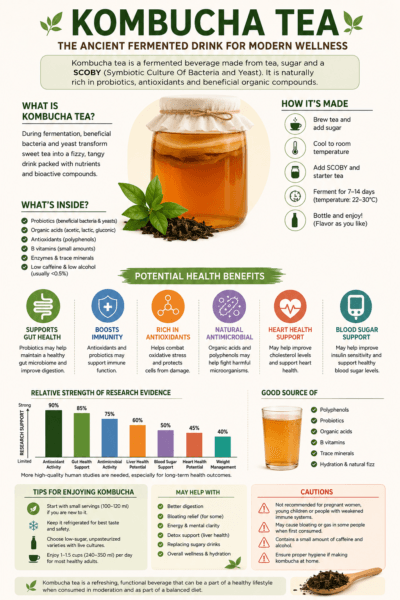
Kombucha tea is a fermented beverage made by combining brewed tea, sugar, and a living culture of bacteria and yeast known as a SCOBY (Symbiotic Culture of Bacteria and Yeast).
Although sugar is added during preparation, most of it is consumed by the microorganisms during fermentation. This process transforms ordinary sweet tea into a lightly carbonated drink containing:
- Beneficial bacteria.
- Yeasts.
- Organic acids.
- Polyphenol antioxidants.
- Small amounts of vitamins.
- Trace minerals.
- Low levels of caffeine.
- Tiny amounts of alcohol (usually less than 0.5%).
Unlike regular tea, kombucha continues to evolve throughout fermentation, developing its signature tangy flavor and natural fizz.
Today, kombucha tea is widely available in supermarkets, health food stores, cafés, and online retailers. Many enthusiasts also enjoy brewing it at home.

My First Experience with Kombucha Tea.
I won’t pretend I loved kombucha immediately.
The first bottle reminded me of sparkling apple cider mixed with vinegar and a hint of green tea. The tartness was unexpected, but after a few more sips, I began appreciating its refreshing taste.

What impressed me more than the flavor was learning how this drink has survived for centuries across different cultures.
Unlike many trendy wellness beverages, kombucha has an incredibly long history, which made me want to understand why it remained popular for so many generations.
The Fascinating History and Origins of Kombucha Tea.
The exact birthplace of kombucha tea remains uncertain, but historians generally believe it originated in ancient China more than 2,000 years ago.
Many traditional records refer to kombucha as the “Tea of Immortality” because people believed it promoted vitality, longevity, and overall wellness.
From China, kombucha gradually spread to neighboring countries including:
- Jepang.
- Korea.
- Russia.
- Eastern Europe.
Each culture adapted the drink to local traditions while preserving its core fermentation process.
Although ancient civilizations praised kombucha for numerous medicinal properties, modern science approaches these claims more cautiously. Researchers continue investigating its potential health effects, and while early findings are promising in some areas, many benefits still require larger human clinical studies.
This balanced perspective is important because kombucha should complement—not replace—a healthy lifestyle or medical treatment.
Why Is Kombucha Called the “Tea of Immortality”?
Ancient practitioners of traditional medicine believed kombucha could:
- memperbaiki pencernaan.
- Increase energy.
- Strengthen the immune system.
- Support detoxification.
- Promote longevity.
These beliefs earned it titles such as:
- Tea of Immortality.
- Divine Tea.
- Elixir of Long Life.
- Mushroom Tea.
Today, researchers recognize that kombucha contains compounds with biological activity, but no scientific evidence suggests it can dramatically extend lifespan or cure diseases.
Instead, it’s best viewed as a nutritious fermented beverage that may contribute to overall wellness.
What Is Kombucha Tea Made Of?
One of the reasons I find kombucha fascinating is that its ingredient list is surprisingly simple.(1)
Traditional kombucha requires only four primary ingredients:
1. Tea.
Most recipes use:
- teh hitam.
- teh hijau.
- Oolong tea.
- White tea.
Each variety influences the final taste, aroma, antioxidant content, and caffeine level.
2. Sugar.
Sugar often worries people, but it’s essential for fermentation.
Rather than remaining entirely in the final beverage, much of the sugar becomes food for the bacteria and yeast. During fermentation, microorganisms convert it into:
- Organic acids.
- Carbon dioxide.
- Trace alcohol.
- Various flavor compounds.
The finished kombucha generally contains far less sugar than the original sweetened tea.
3. SCOBY.
The SCOBY is perhaps the most unique ingredient.
Although many people mistakenly call it a mushroom, it isn’t actually a fungus.
Instead, it’s a living ecosystem containing:
- Beneficial bacteria.
- Various yeast strains.
- Cellulose fibers.
It appears as a soft, rubbery disc floating on top of the tea.
As fermentation continues, the SCOBY grows and forms new layers that can be used to brew additional batches.
4. Starter Tea.
A small amount of previously fermented kombucha is added to lower the pH and protect the new batch from harmful microorganisms during the early stages of fermentation.
This acidic environment is crucial for safe brewing.
How Is Kombucha Tea Made?
The brewing process combines science with traditional food preparation.
Here’s how kombucha tea is typically made.
Step 1: Brew Strong Tea.
Water is boiled before adding tea leaves or tea bags.
The tea is then steeped to develop flavor and antioxidants.
Step 2: Dissolve Sugar.
Sugar is stirred into the hot tea until completely dissolved.
This sugar becomes the primary energy source for fermentation.
Step 3: Cool the Tea.
The tea must cool completely before adding the SCOBY.
Adding it while the tea is still hot can damage or kill the beneficial microorganisms.
Step 4: Add the SCOBY.
The SCOBY and starter tea are gently placed into the cooled sweet tea.
Step 5: Fermentation.
The container is covered with breathable cloth and stored at room temperature.
Fermentation generally lasts:
- 7–14 days for a milder flavor
- Up to 21–30 days for a more acidic kombucha
Temperature significantly affects fermentation speed, with warmer environments producing faster results.
Step 6: Bottling.
Once fermentation reaches the desired flavor, the SCOBY is removed.
The kombucha is transferred into bottles, where optional fruits, herbs, or spices may be added for a second fermentation that creates additional natural carbonation.
Popular flavor additions include:
- jahe.
- lemon.
- blueberry.
- Raspberry.
- mangga.
- Passion fruit.
- kembang sepatu.
- Mint.
What Happens During Fermentation?
Fermentation is the heart of kombucha production.
During this process, beneficial microorganisms work together in a remarkable symbiotic relationship.
Here’s what happens:
- Yeasts break down sugar into glucose and fructose.
- The yeasts convert these sugars into small amounts of ethanol.
- Beneficial bacteria then transform much of that ethanol into organic acids.
- Carbon dioxide is released, creating kombucha’s natural fizz.
- New vitamins, enzymes, and flavor compounds develop.
The final beverage becomes acidic, helping inhibit the growth of many harmful microbes while producing kombucha’s distinctive tangy taste.
Nutritional Value of Kombucha Tea.
The exact nutritional composition varies depending on:
- Tea type
- Sugar quantity
- Fermentation length
- Brewing tangkai
- Flavor additions
However, an unsweetened or lightly sweetened kombucha typically contains:
| bergizi | Approximate Amount (240 ml) |
|---|---|
| kalori | 20–40 |
| karbohidrat | 5–8 g |
| gula | 2–6 g |
| protein | Less than 1 g |
| tambun | 0 g |
| sodium | Very low |
| kafein | 10–25 mg |
Kombucha may also provide:
- Polyphenol antioxidants.
- Organic acids.
- Probiotic microorganisms.
- Small amounts of B vitamins.
- Trace minerals.
- Glucuronic acid.
- Acetic acid.
Because fermentation naturally varies, nutrition labels differ among commercial brands.
Different Types of Kombucha Tea.
One thing I enjoy about kombucha is the variety available.
Different teas create noticeably different flavors and nutritional profiles.
Black Tea Kombucha.
This is the traditional version.
It usually has:
- Rich flavor
- Moderate caffeine
- High antioxidant content
- Balanced acidity
Green Tea Kombucha.
Green tea kombucha offers:
- Lighter taste.
- More grassy flavor.
- Higher catechin antioxidants.
- Slightly lower caffeine.
Oolong Kombucha.
Oolong creates a more floral and complex flavor profile while providing antioxidants unique to partially oxidized tea.
White Tea Kombucha.
putih teh produces one of the mildest kombuchas with a delicate flavor and naturally lower caffeine content.
Herbal “Kombucha”.
Technically, herbal infusions don’t always provide the nutrients needed for a healthy SCOBY over repeated batches. Many brewers therefore blend herbal teas with black or hijau tea rather than using herbs alone.
Why Has Kombucha Tea Become So Popular?
Over the past decade, kombucha tea has become one of the fastest-growing functional beverages worldwide.
In my opinion, several factors explain this popularity.
People today are increasingly interested in foods that support:
- Gut health.
- Digestive wellness.
- fungsi kekebalan tubuh.
- Natural nutrition.
- Reduced intake of sugary soft drinks.
At the same time, scientific interest in the gut microbiome has expanded rapidly. As researchers continue exploring the connection between gut bacteria and overall health, fermented foods like kombucha have attracted significant public attention.
Additionally, kombucha appeals to consumers looking for a refreshing drink that offers more than just hydration. Its unique flavor, natural carbonation, and potential probiotic content make it an appealing alternative to sodas and other sugary beverages.
That said, it’s important to remember that kombucha is not a miracle drink. While it can be part of a healthy diet, its benefits are greatest when combined with nutritious eating, regular physical activity, adequate sleep, and good lifestyle habits.
Science-Backed Benefits of Kombucha Tea.
One of the biggest reasons I became interested in kombucha tea was the number of health claims surrounding it. Some people call it a miracle drink, while others dismiss it as another wellness trend.(2)
After reviewing scientific research, I found that the truth lies somewhere in the middle.
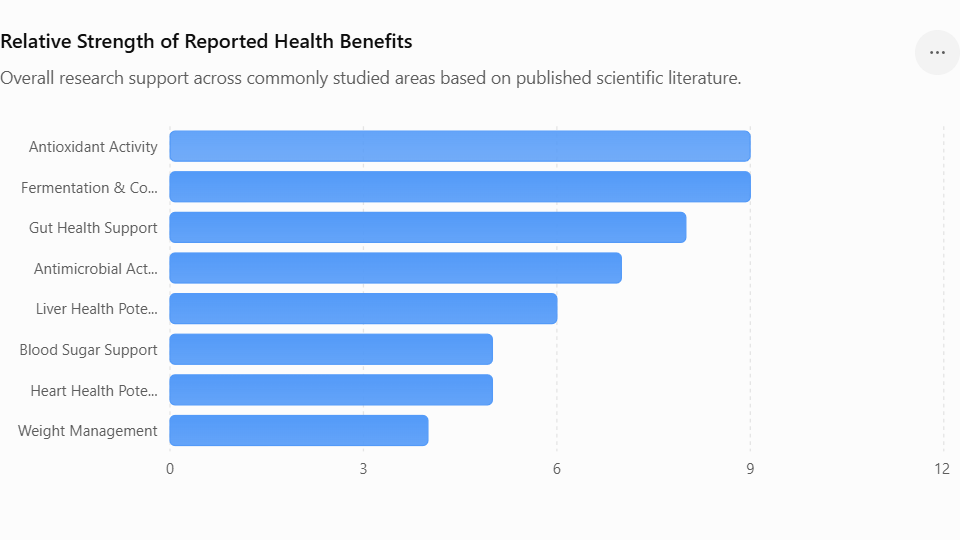
Kombucha tea isn’t a magical cure for every disease, but it does contain compounds—such as probiotics, polyphenols, organic acids, and antioxidants—that may support several aspects of health when consumed as part of a balanced diet.(3)
Let’s look at what the current evidence actually suggests.

1. Kombucha Tea May Improve Gut Health.
One of the most well-known benefits of kombucha tea is its potential to support digestive health.
Because kombucha is a fermented beverage, it contains beneficial microorganisms that may help maintain a healthy balance of bacteria in the digestive tract.
A healthy gut microbiome memainkan peran penting in:
- pencernaan.
- Nutrient absorption.
- fungsi kekebalan tubuh.
- Vitamin production.
- Protection against harmful bacteria.
Ketika saya think about gut health, I always remember that nearly everything we eat influences the trillions of microorganisms living inside our digestive system.
While commercial kombucha varies in probiotic content—especially if pasteurized—unpasteurized kombucha may contribute beneficial microbes to the gut.
Possible digestive benefits include:
- Better digestion
- Reduced bloating (for some people)
- Improved bowel regularity
- Support after antibiotic use
- Increased microbial diversity
However, more large-scale human studies are still needed before researchers can recommend kombucha specifically as a probiotic treatment.
2. Rich Source of Powerful Antioxidants.
Tea naturally contains compounds known as polyphenols, which act as antioxidants.
These antioxidants help neutralize free radicals that may damage healthy cells over time.
Depending on the tea used, kombucha may contain antioxidants such as:
- Catechins.
- flavonoid.
- Theaflavins.
- EGCG (especially green tea kombucha).
Antioxidants may help support:
- Healthy aging.
- Cellular protection.
- Reduced oxidative stress.
- Brain health.
- Heart health.
Green tea kombucha generally contains higher amounts of catechins than black tea versions.
3. Kombucha Tea May Support the Immune System.
Did you know that a significant portion of your immune system is closely connected to your gut?
Because kombucha may help maintain a healthier gut microbiome, researchers believe it could indirectly support immune function.
Additionally, kombucha contains:
- Antioxidants.
- Organic acids.
- Polyphenols.
- Trace vitamins.
Together, these compounds may help the body respond to oxidative stress and inflammation.
Although kombucha isn’t an immune booster in the medical sense, it may contribute to overall immune wellness when paired with:
- Nutritious eating.
- tidur yang cukup.
- Olahraga teratur.
- manajemen stres.
4. May Help Reduce Harmful Bacteria.
During fermentation, kombucha produces acetic acid, the same acid found in vinegar.
Acetic acid has natural antimicrobial properties.
Laboratory studies suggest kombucha may inhibit the growth of certain harmful microorganisms, including some strains of:
- E. coli.
- Salmonella.
- Staphylococcus aureus.
This antimicrobial activity appears to come primarily from:
- Acetic acid.
- Low pH.
- Tea polyphenols.
However, laboratory findings don’t necessarily translate directly to human health outcomes.
5. Kombucha Tea May Support Heart Health.
Cardiovascular disease remains one of the leading causes of death worldwide.
Researchers have explored whether kombucha may contribute to heart health through several mechanisms.
Animal studies suggest kombucha may help:
- Lower LDL (“bad”) cholesterol.
- Increase HDL (“good”) cholesterol.
- Reduce oxidative damage.
- Improve lipid metabolism.
Tea itself—particularly green tea—has long been associated with heart health because of its polyphenol content.
Although human evidence on kombucha is still limited, replacing sugary soft drinks with kombucha may support healthier dietary habits.
6. May Help Support Healthy Blood Sugar Levels.
Some early research suggests kombucha—especially green tea kombucha—may help memperbaiki markers related to blood sugar regulation.
Possible mechanisms include:
- Slower carbohydrate digestion
- Improved insulin sensitivity
- Reduced glucose absorption
- Antioxidant protection
It’s important to remember that many commercial kombucha products still contain added sugar.
If you’re managing diabetes or prediabetes, always:
- Read nutrition labels
- Choose low-sugar varieties
- Discuss dietary changes with your healthcare provider
7. Kombucha Tea May Support Liver Health.
One fascinating area of research involves kombucha’s potential role in protecting the liver.
Animal studies have shown that kombucha’s antioxidants may help Mengurangi stres oksidatif in liver tissue.
Researchers believe this may be related to:
- polifenol
- Glucuronic acid
- Antioxidant enzymes
The liver naturally performs detoxification without needing “detox drinks.”
Therefore, instead of saying kombucha detoxifies the body, it’s more accurate to say that its antioxidant compounds may support normal liver function.
Human clinical evidence remains limited.
8. May Help Reduce Oxidative Stress.
Every day, our bodies produce free radicals through:
- Latihan.
- Pollution.
- merokok.
- stres.
- Normal metabolism.
Excessive oxidative stress may contribute to aging and chronic diseases.
Because kombucha contains antioxidants from tea, drinking it may help reduce oxidative damage.
The longer tea ferments (within safe limits), the more certain antioxidant compounds become available.
9. Kombucha Tea May Help with Weight Management.
One of the questions I hear most often is:
Can kombucha tea help with weight loss?
The answer is possibly—but indirectly.
Kombucha isn’t a fat-burning drink.
However, it may support weight management by:
- Replacing sugary sodas.
- Being relatively low in calories.
- Helping people stay hydrated.
- Supporting gut health.
- Encouraging healthier beverage choices.
Green tea kombucha may provide additional manfaat because green tea naturally contains catechins and small amounts of caffeine.
Weight loss still depends primarily on:
- Calorie balance.
- Nutrisi.
- Latihan.
- Tidur.
- konsistensi.
10. Kombucha Tea May Improve Digestion.
Many people report improved digestion after regularly drinking kombucha.
Alasan yang mungkin termasuk:
- Organic acids.
- Beneficial bacteria.
- Improved microbial balance.
- Better enzyme activity.
Some individuals notice:
- Less constipation.
- Better bowel movements.
- Reduced heaviness after meals.
However, others may experience the opposite initially, including gas or bloating while their digestive system adjusts.
11. May Provide a Natural Energy Boost.
Unlike energy drinks loaded with sugar, kombucha offers a gentler source of energy.
Depending on the tea used, kombucha contains:
- Small amounts of caffeine.
- B vitamins (in some varieties).
- Organic acids.
I find it provides a mild lift without the intense crash associated with many commercial energy drinks.
Athletes sometimes enjoy kombucha before or after workouts as a refreshing alternative to sugary beverages.
12. Kombucha Tea May Help Reduce Sugar Intake.
Many people replace:
- soda.
- Sweetened juices.
- Artificial energy drinks.
with kombucha.
Because kombucha is naturally fizzy, it can satisfy cravings for carbonated beverages while containing fewer calories than many soft drinks.
Choosing varieties with minimal added sugar offers the greatest nutritional benefit.
13. May Support Healthy Skin.
Healthy skin begins from within.
Although scientific studies specifically linking kombucha to skin improvements remain limited, its antioxidants may support skin kesehatan by helping protect cells from oxidative stress.
Additionally, improved gut health may indirectly influence certain skin conditions through the gut-skin axis.
Still, kombucha shouldn’t be considered a treatment for acne, eczema, or other dermatological conditions.
14. May Support Brain Health.
Emerging research suggests that the gut and brain communicate continuously through what’s known as the gut-brain axis.
Because kombucha may influence gut microbiota, researchers are exploring whether fermented foods could also affect:
- suasana hati.
- Stress response.
- Cognitive health.
- Mental well-being.
At present, evidence remains preliminary.
15. May Be a Better Alternative to Sugary Soft Drinks.
One practical advantage I appreciate about kombucha tea is that it can make replacing sugary beverages easier.
Instead of drinking:
- Cola.
- Sweetened iced tea.
- Energy drinks.
- Flavored sodas.
many people enjoy kombucha because it offers:
- Natural carbonation.
- Complex flavor.
- Lower sugar.
- Tea antioxidants.
Making healthier beverage choices consistently can positively affect overall nutrition.
Kombucha Tea for Athletes.
Athletes often look for beverages that support hydration and recovery.
Although kombucha isn’t a sports drink, it may fit into an active lifestyle because it provides:
- cairan.
- Small amounts of electrolytes.
- Antioxidants.
- Mild caffeine (depending on the tea).
- Organic acids.
I wouldn’t use kombucha as the only hydration source during intense endurance exercise, but it can be a refreshing drink before or after moderate workouts.
Can Kombucha Tea Help You Detox?
One of the biggest myths is that kombucha “flushes toxins” from the body.
Here’s my perspective.
Your body already has highly efficient detoxification organs:
- hati.
- Kidneys.
- Lungs.
- kulit.
- Digestive system.
Kombucha doesn’t replace these organs.
Instead, its antioxidants may help support normal cellular function, while maintaining hydration and a healthy diet contributes to your body’s natural detoxification processes.
Is Kombucha Tea Good for Everyone?
Although many healthy adults can enjoy kombucha in moderation, individual responses vary.
Some people notice:
- Better digestion.
- Increased energy.
- Improved hydration.
Others may experience:
- Temporary bloating.
- Gas.
- Mild stomach discomfort.
This variation often depends on:
- Gut microbiome.
- Serving size.
- Sugar content.
- Fermentation level.
- Individual sensitivity.
Whenever I try a new fermented food, I start with a small serving to see how my body responds.
What Science Still Doesn’t Know?
Even though kombucha has been consumed for centuries, researchers continue studying it.
Many promising findings come from:
- Laboratory studies.
- Animal research.
- Small human trials.
More high-quality clinical studies are needed to determine:
- Optimal serving size.
- Long-term safety.
- Specific probiotic strains.
- Disease-specific benefits.
- Effects in different age groups.
For now, the evidence supports viewing kombucha as a nutritious fermented beverage—not a cure-all.
Kombucha Tea Side Effects: What You Should Know Before Drinking It.
Although I enjoy kombucha tea and appreciate its unique flavor and potential health benefits, I also believe it’s important to discuss the possible downsides. Like any fermented food or beverage, kombucha isn’t suitable for everyone.
Most healthy adults can drink kombucha in moderation without problems. However, some individuals may experience mild side effects, especially if they are new to fermented foods or consume large amounts.
1. Digestive Discomfort.
When I first started drinking kombucha tea, I noticed slight bloating after my first bottle. This isn’t uncommon.
Because kombucha contains probiotics and organic acids, introducing it too quickly may cause temporary digestive symptoms, termasuk:
- kembung.
- Gas.
- Mild stomach cramps.
- Loose stools.
- Increased bowel movements.
These symptoms usually improve as your digestive system adapts. Starting with a small serving (around 100–120 ml) can help minimize discomfort.
2. Excess Sugar Intake.
Although much of the sugar is consumed during fermentation, some commercial kombucha products still contain significant amounts of added sugar.
Before buying a bottle, I always check the nutrition label.
Choose products with:
- Low added sugar.
- No artificial sweeteners.
- Live cultures (if desired).
- Minimal unnecessary ingredients.
3. Small Amounts of Alcohol.
Many people don’t realize that kombucha naturally contains a small amount of alcohol.
During fermentation, yeast converts sugar into ethanol. Most commercially sold kombucha contains less than 0.5% alcohol, which is considered non-alcoholic in many countries.
However, homemade kombucha may contain higher alcohol levels if fermentation is prolonged or uncontrolled.
4. Acidity and Tooth Enamel.
Kombucha is naturally acidic due to the production of organic acids during fermentation.
Frequent exposure to acidic beverages may contribute to enamel erosion over time.
To protect your teeth, I recommend:
- Drinking kombucha with meals.
- Avoiding sipping it continuously sepanjang hari.
- Rinsing your mouth with water afterward.
- Waiting at least 30 minutes before brushing your teeth.
5. Homemade Brewing Risks.
Making kombucha at home can be rewarding, but cleanliness is essential.
Poor hygiene or improper fermentation may allow harmful bacteria or mold to contaminate the drink.
Signs of contamination include:
- Fuzzy green, black, blue, or pink mold
- Strong rotten smell
- Slimy or unusual textures
- Unexpected discoloration
If you notice any of these signs, discard the batch immediately.
Who Should Avoid Kombucha Tea?
Although kombucha is safe for many healthy adults, certain people should be cautious or avoid it unless advised otherwise by a healthcare professional.
These groups include:
- wanita hamil.
- Breastfeeding mothers.
- Young children.
- Individuals with weakened immune systems.
- People undergoing chemotherapy.
- Organ transplant recipients.
- Individuals with severe digestive disorders.
- Those with alcohol sensitivity.
- People with advanced liver disease.
If you have diabetes, choose low-sugar varieties and discuss kombucha consumption with your healthcare provider.
How Much Kombucha Tea Should You Drink?
One question I often hear is:
“How much kombucha tea is safe to drink every day?”
There isn’t a universal recommendation, but moderation is generally best.
pemula.
Mulailah dengan:
100–120 ml per day.
Observe how your body responds for several days.
Regular Drinkers.
Most healthy adults can comfortably enjoy:
240–350 ml (1–1½ cups) daily
Drinking excessive amounts isn’t necessarily healthier and may increase the risk of digestive discomfort or excess calorie intake.
What’s the Best Time to Drink Kombucha Tea?
There isn’t a single “best” time, but many people prefer drinking kombucha:
pagi.
A small glass may provide:
- Mild caffeine.
- Refreshing hydration.
- Gentle energy.
Before Meals.
Some people find kombucha stimulates appetite and digestion.
After Meals.
Others prefer it after eating because it feels refreshing and may help with digestion.
Before Exercise.
Since kombucha contains small amounts of caffeine and antioxidants, some active individuals enjoy it before light workouts.
However, I wouldn’t rely on kombucha as a sports hydration drink during prolonged or high-intensity exercise.
Homemade vs. Store-Bought Kombucha Tea.
Both options have advantages and disadvantages.
| ciri | Homemade Kombucha | Store-Bought Kombucha |
|---|---|---|
| biaya | Lower over time | More expensive |
| Flavor | Fully customizable | bersesuaian |
| kesentosa | Depends on hygiene | Strict quality control |
| probiotik | Often higher | Varies by brand |
| Sugar Control | Adjustable | Depends on manufacturer |
| Convenience | Requires preparation | Ready to drink |
If you’re a beginner, starting with a reputable commercial brand can be a safer introduction before attempting home brewing.
How to Choose a High-Quality Kombucha Tea?
Whenever I shop for kombucha, I look for a few key features.
Choose products that are:
- Refrigerated.
- Made with real tea.
- Lower in added sugar.
- Free from unnecessary artificial ingredients.
- Clearly labeled.
- Produced by reputable manufacturers.
If you enjoy flavored kombucha, select varieties that use real fruit or herbs rather than artificial flavorings.
How to Store Kombucha Tea?
Proper storage helps preserve flavor and quality.
I recommend:
- Keeping unopened bottles refrigerated.
- Refrigerating after opening.
- Consuming opened bottles within a few days.
- Avoiding prolonged exposure to sunlight or heat.
Warm temperatures can continue fermentation, making kombucha more acidic and increasing carbonation.
Common Myths About Kombucha Tea.
Let’s clear up a few common misconceptions.
Myth 1: Kombucha Cures Every Disease.
Fakta: There is no scientific evidence that kombucha cures cancer, diabetes, heart disease, or other serious illnesses.
Myth 2: More Is Always Better.
Fakta: Drinking several bottles daily won’t necessarily provide greater benefits and may increase digestive discomfort or sugar intake.
Myth 3: All Kombucha Contains Large Amounts of Alcohol.
Fakta: Most commercially available kombucha contains less than 0.5% alcohol, though homemade versions may vary.
Myth 4: Kombucha Completely Detoxifies the Body.
Fakta: Your liver and kidneys naturally detoxify your body. Kombucha may support overall wellness, but it doesn’t replace these organs.
Myth 5: Every Kombucha Contains the Same Probiotics.
Fakta: berbeda brands use different fermentation methods, ingredients, and processing techniques, resulting in varying probiotic content.
pertanyaan yang sering diajukan.
1. Is kombucha tea healthy?
Yes, for most healthy adults, kombucha tea can be part of a balanced diet. It contains antioxidants, organic acids, and beneficial microorganisms, though it shouldn’t be viewed as a cure-all.
2. Can I drink kombucha tea every day?
Yes, many people enjoy kombucha daily. Around 240–350 ml per day is generally considered a moderate amount for healthy adults.
3. Does kombucha tea contain caffeine?
Yes. Since it’s brewed from tea, kombucha contains caffeine, but usually much less than a standard cup of coffee.
4. Can kombucha help with weight loss?
Kombucha isn’t a weight-loss drink, but replacing high-sugar beverages with kombucha may support healthier eating habits and calorie control.
5. Does kombucha tea expire?
Yes. Over time, kombucha continues to ferment, becoming more acidic. Always check the expiration date and store it as directed.
6. Is kombucha vegan?
Most kombucha is vegan because it’s made from tea, sugar, bacteria, and yeast. However, flavored varieties may include ingredients such as honey, so it’s worth checking the label.
7. Can children drink kombucha?
Because kombucha contains caffeine, trace alcohol, and live cultures, it’s best to consult a pediatrician before giving it to children.
8. Can I drink kombucha on an empty stomach?
Some people tolerate it well, while others experience stomach discomfort due to its acidity. If you’re unsure, try drinking it with or after a meal.
9. What is kombucha tea good for?
Kombucha tea may support gut health, aid digestion, provide antioxidants, and help reduce sugary drink intake. While it may contribute to overall wellness, it is not a cure for any disease.
10. Is kombucha legal in India?
Yes, kombucha is legal in India. It is sold by several food and beverage brands, provided it complies with the Food Safety and Standards Authority of India (FSSAI) regulations.
11. Is it safe to drink kombucha tea every day?
Yes, most healthy adults can safely drink kombucha tea daily in moderation. About 240–350 ml (1–1½ cups) per day is generally considered a reasonable amount. Beginners should start with a smaller serving to see how their body responds.
Expert Tips for Drinking Kombucha Tea.
Based on my experience and current evidence, here are a few practical tips:
- Start with small servings if you’re new to kombucha.
- Choose brands with lower sugar content.
- Store kombucha in the refrigerator.
- Don’t rely on kombucha as a replacement for medical treatment.
- Pair it with a balanced diet rich in fruits, vegetables, whole grains, and lean proteins.
- If you have a medical condition or are taking medications, talk to your healthcare provider before making it a regular part of your diet.
pemikiran akhir.
Kombucha tea has been enjoyed for centuries, and after learning more about it, I understand why it continues to attract attention. Its refreshing taste, natural carbonation, antioxidants, and fermentation process make it a unique beverage that can fit into a healthy lifestyle.
That said, I don’t see kombucha as a miracle drink—and I don’t think it needs to be one. Its real value lies in being a flavorful alternative to sugary soft drinks while offering potential digestive and antioxidant benefits.
The key is moderation. Drinking one glass a day, choosing a quality product, and maintaining an overall balanced diet are far more penting than expecting kombucha to solve every health concern.
If you’re curious about fermented foods, kombucha tea can be an enjoyable addition to your routine. Start slowly, pay attention to how your body responds, and choose products from reputable brands. Like many nutritious foods, kombucha works best as one piece of a healthy lifestyle—not the entire picture.
+3 Sumber
FitnessQuora has strict sourcing guidelines and relies on peer-reviewed studies, educational research institutes, and medical organizations. We avoid using tertiary references. You can learn more about how we ensure our content is accurate and up-to-date by reading our Kebijakan Editorial.
- Kombucha: Formulation, chemical composition, and therapeutic potentialities.; https://pmc.ncbi.nlm.nih.gov/articles/PMC8844156/
- A Review on Kombucha Tea—Microbiology, Composition, Fermentation, Beneficial Effects, Toxicity, and Tea Fungus; https://ift.onlinelibrary.wiley.com/doi/abs/10.1111/1541-4337.12073
- Kombucha Tea: A Functional Beverage and All its Aspects; https://pmc.ncbi.nlm.nih.gov/articles/PMC12103323/